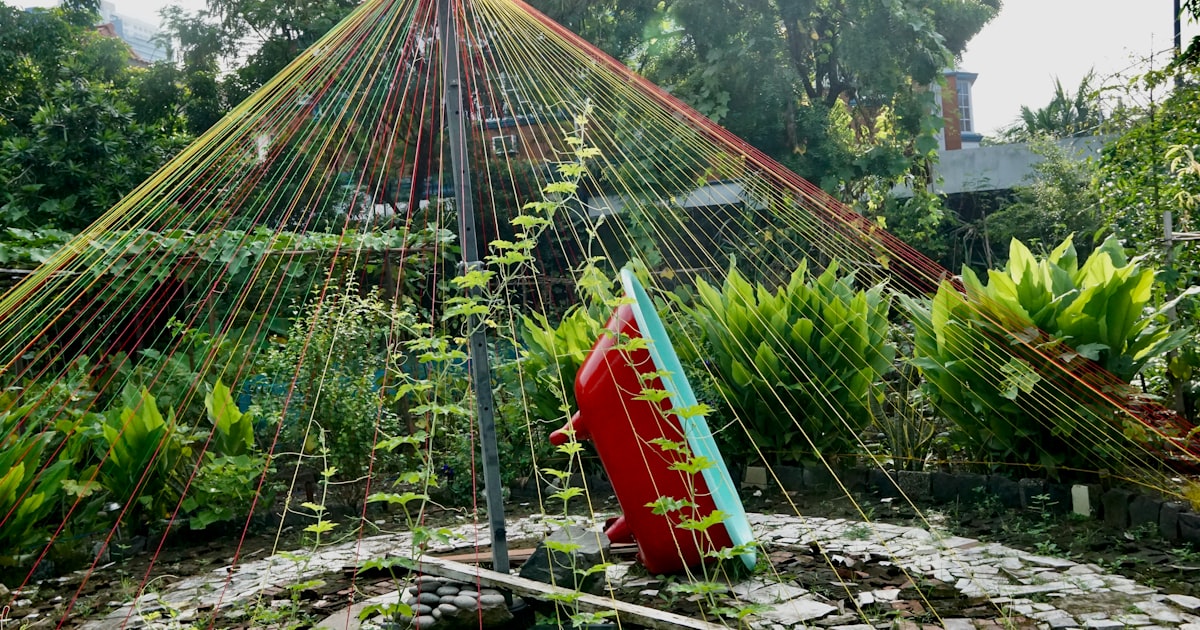
Permaculture can sound like a big, complicated concept reserved for off-grid hippies with five acres and a composting toilet. But the truth is, permaculture principles can transform even a tiny suburban backyard into a productive, low-maintenance, thriving little ecosystem. And the best part? A lot of it is stuff you are probably already doing without realising it.
Let us break it down.
What Is Permaculture, Anyway?
The word “permaculture” is a mashup of “permanent” and “agriculture” (or “culture,” depending on who you ask). It was developed right here in Australia by Bill Mollison and David Holmgren in the 1970s in Tasmania. So if you are gardening in Australia and applying these principles, you are literally going back to where it all started.
At its core, permaculture is a design system based on observing how natural ecosystems work and then mimicking those patterns in our gardens, homes, and communities.
The Three Ethics
Everything in permaculture flows from three simple ethics:
- Earth Care: Look after the soil, water, plants, and animals. A healthy garden starts with healthy land.
- People Care: Grow food that nourishes you, your family, and your community. Share skills and knowledge.
- Fair Share: Take only what you need. Return the surplus. Compost your scraps, share your harvest, save seeds for next season.
These are not rules carved in stone. They are guiding principles that help you make better decisions in the garden and beyond.
Key Permaculture Principles for Home Gardens
There are 12 official permaculture design principles (developed by David Holmgren), but you do not need to memorise all of them to get started. Here are the ones that make the biggest difference in a home garden.
1. Observe and Interact
Before you plant anything, spend time watching your garden. Where does the sun hit? Where does water pool after rain? Which spots are windy? Where do birds hang out? A season of observation before you design will save you years of frustration.
2. Stack Functions
In permaculture, every element should serve multiple purposes. A fruit tree does not just produce food. It also provides shade, habitat for birds, leaf litter for mulch, and a windbreak for delicate veggie beds behind it. A chicken does not just lay eggs. It also eats scraps, fertilises the soil, and controls insects.
When you choose plants, think about what else they do beyond the obvious. A bean plant fixes nitrogen in the soil while producing food. A sunflower attracts pollinators while giving you edible seeds.
3. Use Edges and Margins
In nature, the most productive and diverse areas are at the edges: where forest meets grassland, where land meets water. You can create more “edge” in your garden by using curved bed shapes instead of straight lines, building keyhole gardens, or creating small ponds.
A wavy garden bed edge has a longer total boundary than a straight one, giving you more planting space and more microclimates to work with.
4. Produce No Waste
Every output from one system should be an input for another. Kitchen scraps become compost. Compost feeds the soil. Healthy soil grows food. Food scraps go back to the compost. The loop never breaks.
Prunings become mulch. Rainwater gets harvested. Even “weeds” can be useful as chop-and-drop mulch or compost activators.
DESIGN YOUR GARDEN LIKE A PRO
Plan your permaculture garden with VeggieCrush
Use the smart planner to organise companion plants, track seasonal rotations, and build a garden that works like an ecosystem.
Download the free app5. Use Small, Slow Solutions
You do not need to transform your entire backyard in one weekend. Start with one garden bed. Build one compost bin. Plant one fruit tree. Permaculture is about long-term, sustainable change, not a garden makeover show.
Small changes compound over time. A single compost heap, maintained consistently, will transform your soil over a couple of years.
6. Integrate, Don’t Segregate
Instead of keeping herbs in one spot, veggies in another, and flowers somewhere else, mix them together. This is basically companion planting on a design level. Interplanting creates biodiversity, confuses pests, attracts beneficial insects, and makes your garden more resilient.
Zone Planning for Home Gardens
One of the most practical permaculture tools is zone planning. It is about placing things based on how often you visit them.
| Zone | Distance | What Goes Here |
|---|---|---|
| Zone 0 | Your house | Indoor herb pots on the kitchen windowsill |
| Zone 1 | Right outside the back door | Salad greens, herbs, daily harvest veggies |
| Zone 2 | A short walk away | Main veggie beds, compost, berry bushes |
| Zone 3 | Further out | Fruit trees, larger crops, potatoes |
| Zone 4 | Edge of your property | Native plantings, wildlife habitat |
| Zone 5 | Wild area | Left to nature, observation area |
In a small suburban garden, you might only have zones 0 through 3. That is perfectly fine. The point is to put the things you interact with daily (herbs, salad greens) as close to your kitchen door as possible.
The Food Forest Concept
A food forest is a garden designed to mimic the layered structure of a natural forest, but using edible plants. Even in a small space, you can create a mini food forest with:
- Canopy layer: A fruit tree (citrus, fig, or stone fruit)
- Understorey: A smaller tree like a dwarf apple or finger lime
- Shrub layer: Blueberries, rosemary, or curry leaf
- Herbaceous layer: Comfrey, lemongrass, sweet potato
- Ground cover: Strawberries, nasturtiums, clover
- Vine layer: Passionfruit or grape on a trellis
- Root layer: Turmeric, ginger, yacon
Once established, a food forest requires minimal maintenance because the plants support each other, just like a natural ecosystem.
Applying Permaculture Principles Right Now
You do not need to redesign your entire garden to start using permaculture thinking. Here are some practical starting points.
Build your soil: Start composting. Add mulch. Stop tilling. Healthy soil is the foundation of everything in permaculture.
Harvest water: Put a rain tank on your downpipe. Use swales (shallow ditches on contour) to slow and capture rainwater in your garden beds.
Attract wildlife: Plant native flowering plants alongside your veggies. Put up a bird bath. Build a small insect hotel. The more biodiversity you have, the fewer pest problems you will face.
Companion plant: Grow basil with tomatoes, marigolds with everything, and beans with corn. Let plants help each other out.
Close the loop: Compost every scrap. Use your own compost. Save seeds from your best plants. Reduce your dependence on bought inputs.
START YOUR PERMACULTURE JOURNEY
Companion planting guides at your fingertips
VeggieCrush helps you pair plants that support each other, so you can build a thriving garden ecosystem step by step.
Download the free appAustralian Permaculture Pioneers
Australia has a proud permaculture history, and it is worth knowing the names behind the movement.
Bill Mollison (1928 to 2016) was a Tasmanian researcher, author, and teacher who co-developed the permaculture concept. His book “Permaculture: A Designers’ Manual” remains the definitive reference.
David Holmgren co-originated permaculture with Mollison and later developed the 12 design principles that guide modern permaculture practice. His property “Melliodora” in Hepburn Springs, Victoria, is a living example of suburban permaculture and is open for tours.
Their work has inspired millions of people around the world, and permaculture is now practised in over 140 countries.
Common Mistakes to Avoid
Other pitfalls to watch for:
- Ignoring your climate: Permaculture looks different in tropical Darwin than it does in cool-climate Hobart. Design for your local conditions.
- Skipping the observation phase: Rushing to plant before you understand your site leads to costly mistakes.
- Overcomplicating things: A simple garden bed with good companion planting is permaculture. You do not need a swale, a food forest, and a chicken tractor on day one.
The Big Picture
Permaculture is not really about gardening techniques. It is a way of thinking. Once you start seeing your garden as an interconnected system rather than a collection of individual plants, everything changes. You stop fighting nature and start working with it. Your garden becomes more productive, more resilient, and a whole lot less work over time.
And honestly, that is the dream, is it not? A garden that practically runs itself while feeding you beautifully. Start small, think big, and let nature do the heavy lifting.
Get the VeggieCrush App
Join thousands of Aussie gardeners growing better with personalised planting reminders, pest alerts, and expert advice.


Free to download on iOS and Android. No credit card required