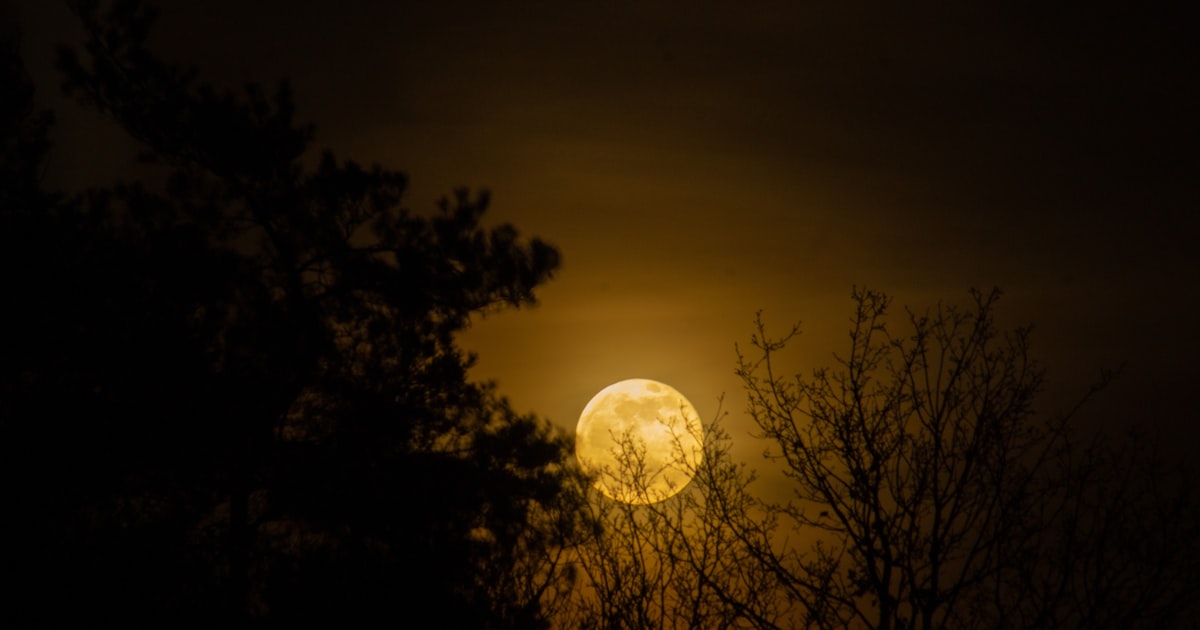
If you’ve spent any time in gardening circles, you’ve probably heard someone mention moon planting. Maybe your grandmother swore by it. Maybe you’ve seen a lunar planting calendar at the nursery and wondered whether it’s worth following. Or maybe you’ve dismissed the whole idea as a bit “out there.”
The truth is, moon planting sits in that fascinating space between ancient tradition, folk wisdom, and modern science. So let’s take an honest, open-minded look at what it is, what the evidence says, and whether it might be worth trying in your garden.
What Is Moon Planting?
Moon planting (also called lunar gardening) is the practice of timing your gardening activities, particularly planting, pruning, and harvesting, according to the phases of the moon. It’s been practised for thousands of years by cultures all over the world, from European farmers to Indigenous communities across the globe.
The core idea is simple: just as the moon influences ocean tides through gravitational pull, it may also influence moisture in the soil and the flow of sap in plants.
The Basic Rules
Moon planting follows the roughly 29.5 day lunar cycle, which is divided into four main phases. Here’s how gardeners traditionally use them:
Waxing Moon (New Moon to Full Moon)
As the moon grows brighter, moisture is believed to be drawn upward. This phase is considered best for planting crops that produce above the ground.
First Quarter (New Moon to Half Moon): Plant leafy crops like lettuce, spinach, cabbage, and herbs. The increasing light encourages leaf growth.
Second Quarter (Half Moon to Full Moon): Plant fruiting crops like tomatoes, beans, peas, capsicum, and pumpkins. The strong moonlight and rising moisture are said to favour fruit development.
Waning Moon (Full Moon to New Moon)
As the moon shrinks, energy and moisture are believed to be drawn downward. This phase is considered best for root crops and maintenance.
Third Quarter (Full Moon to Half Moon): Plant root crops like carrots, onions, beetroot, and potatoes. The downward energy encourages root development.
Fourth Quarter (Half Moon to New Moon): A rest period. Focus on garden maintenance: weeding, composting, mulching, turning soil, and preparing beds. Avoid planting.
The Historical Roots
Moon planting isn’t some recent New Age invention. It has deep roots (pun intended) in agricultural history.
The Roman writer Pliny the Elder wrote about lunar gardening in his Natural History texts nearly 2,000 years ago. Traditional farming communities across Europe, Asia, and the Americas have followed lunar cycles for centuries. Biodynamic farming, developed by Rudolf Steiner in the 1920s, incorporates lunar planting as a core principle.
In Australia, many Indigenous communities have long followed natural cycles, including lunar patterns, in their land management practices. The connection between the moon and the land is woven deeply into many cultural traditions worldwide.
PLANTING CALENDAR
Never miss the right planting window
VeggieCrush's personalised planting calendar tells you exactly when to plant each crop in your climate zone, so you always stay on schedule.
Download the free appWhat Does Science Say?
Here’s where things get interesting, and a bit mixed.
What’s established:
- The moon absolutely does influence tides, and its gravitational pull affects water on Earth. This is basic physics.
- Some studies have found correlations between lunar phases and seed germination rates. A well-known study published in the Journal of Pharmacy and Pharmacology found that certain plants absorbed water at different rates depending on the lunar cycle.
- Moonlight itself (reflected sunlight) is measurably different at various phases and could theoretically influence photosensitive processes in plants.
What’s less clear:
- Whether the gravitational effect on soil moisture is significant enough to meaningfully impact plant growth in a typical garden setting.
- Whether any observed effects are large enough to make a practical difference compared to factors like soil quality, watering, temperature, and sunlight.
- Many studies have been small-scale, and results haven’t been consistently replicated.
The honest answer: The science is not conclusive in either direction. There are intriguing hints that something might be going on, but there’s no solid, replicated evidence that moon planting dramatically improves garden outcomes.
Why So Many Aussie Gardeners Swear by It
Walk into any community garden, farmers’ market, or gardening club in Australia and you’ll find people who follow moon planting religiously. Ask them about it and you’ll hear stories of better germination, healthier plants, and improved harvests.
Are these results from the lunar cycle itself, or from the fact that following a planting calendar encourages more consistent, well-timed gardening? It’s probably a bit of both.
Here’s what matters: gardeners who follow moon planting tend to be more attentive, more organised, and more disciplined about their planting schedules. They plant at regular intervals, they pay attention to what they’re planting and when, and they engage more deeply with the rhythms of their garden. Those habits alone lead to better results, regardless of what the moon is doing.
A Practical Approach
You don’t have to be a true believer or a complete sceptic. Here’s a sensible middle ground:
- Use a moon planting calendar as a guide, not a rule. It gives you a framework for when to do what, which is genuinely useful.
- Prioritise practical conditions. Soil temperature, weather forecasts, and plant health always come first.
- Experiment for yourself. Try planting the same crop in two batches, one during the “right” lunar phase and one during the “wrong” one. Keep notes and see if you notice any difference.
- Enjoy the ritual. There’s something lovely about connecting your gardening to the rhythms of the natural world. Even if the effect is small, the mindfulness it brings to your gardening practice is real.
Moon Planting Calendar Basics
Here’s a quick reference to get you started:
| Moon Phase | Duration | Best Activities |
|---|---|---|
| New Moon | Day 1 to 3 | Plant leafy greens, start new garden beds |
| First Quarter | Day 4 to 7 | Plant leafy crops (lettuce, spinach, herbs) |
| Second Quarter | Day 8 to 14 | Plant fruiting crops (tomatoes, beans, pumpkin) |
| Full Moon | Day 15 to 17 | Plant root crops, transplant seedlings |
| Third Quarter | Day 18 to 21 | Plant root crops (carrots, onions, potatoes) |
| Fourth Quarter | Day 22 to 28 | Rest period: weed, mulch, compost, prepare beds |
GARDEN PLANNING
Stay organised with a planting schedule that works for you
Whether you follow the moon or not, VeggieCrush keeps your planting on track with personalised reminders and seasonal guides.
Download the free appBeyond the Moon: Biodynamic Gardening
If moon planting interests you, biodynamic gardening takes it several steps further. Developed by Rudolf Steiner, biodynamic practice considers not just lunar phases but also planetary positions, zodiac signs, and specific preparations made from herbs, minerals, and manure.
It’s a holistic farming philosophy that treats the garden as a self-sustaining ecosystem. Some biodynamic practices (like composting, crop rotation, and biodiversity) are excellent gardening advice by any measure. Others (like burying cow horns filled with manure at specific times) are more, well, out there.
As with moon planting itself, the best approach is curiosity without dogma.
The Bottom Line
Moon planting is not pseudoscience nonsense, and it’s not proven magic either. It’s a fascinating tradition with thousands of years of history, some intriguing (if inconclusive) scientific support, and a devoted following of gardeners who genuinely get great results.
At the very least, it provides a structured planting schedule that encourages good gardening habits. At best, it might give your garden a subtle edge that science hasn’t fully explained yet.
Either way, there’s nothing to lose by trying it. And there’s something deeply satisfying about stepping outside at night, looking up at the moon, and feeling connected to gardeners throughout history who did exactly the same thing.
Give it a go. See what you think. Your garden is the best laboratory you’ve got.
Get the VeggieCrush App
Join thousands of Aussie gardeners growing better with personalised planting reminders, pest alerts, and expert advice.


Free to download on iOS and Android. No credit card required