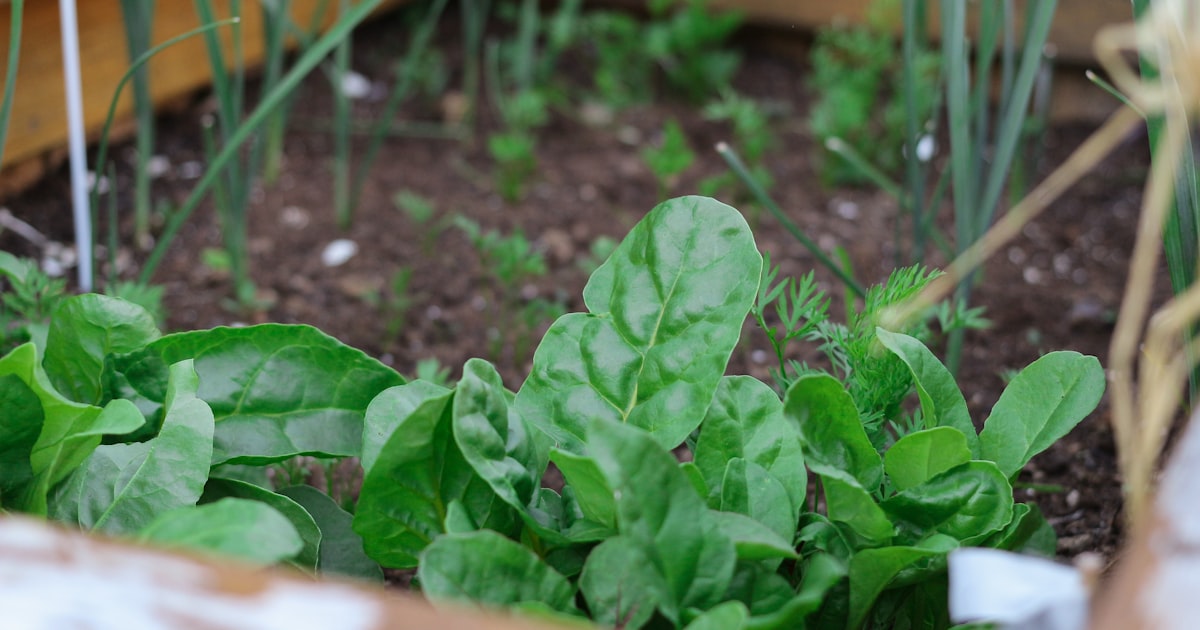
Spinach is one of those vegetables that everybody knows is good for them, but not enough people grow at home. That is a shame, because fresh spinach straight from the garden is a completely different experience to the sad, wilted bags at the supermarket. It is sweeter, crunchier, and about a thousand times more satisfying when you grew it yourself.
The trick with spinach? Timing. Get that right and the rest is easy.
Quick Facts
| Family | Amaranthaceae (Amaranth family) |
| Sun | Partial shade to full sun |
| Water | Regular |
| Difficulty | Easy to moderate |
| Time to Harvest | 6 to 8 weeks |
| Plant Size | 15 to 30cm tall |
| Spacing | 15 to 20cm apart |
The Cool Season Champion
Here is the most important thing to know about spinach: it is a cool season crop. It loves temperatures between 10 and 20 degrees Celsius and absolutely hates hot weather. When the mercury climbs above 25 degrees, spinach bolts (sends up a flower stalk), the leaves turn bitter, and the plant basically says “I’m done.”
This is why spinach is a winter hero in Australia. While most of your summer crops are finished and the garden looks a bit bare, spinach steps up and fills the gap beautifully.
When to Plant by Zone
- Tropical: May to August (dry season coolness)
- Subtropical: March to August
- Temperate: February to May, and again July to September
- Cool climates: March to May, and August to September
- Arid: March to August
In most parts of Australia, autumn is the sweet spot for sowing spinach. The weather is cooling down, the soil is still warm enough for germination, and you will be harvesting through winter.
English Spinach vs Other Types
When Australians talk about “spinach”, things can get a bit confusing. Here is a quick breakdown of what is what.
English Spinach (True Spinach)
This is Spinacia oleracea, the real deal. Smooth or slightly crinkled dark green leaves on short stems. It is what this article is mainly about. Delicate flavour, tender texture, and the classic choice for salads and cooking.
Baby Spinach
Not a separate variety, just English spinach harvested young (at about 4 to 6 weeks). The smaller leaves are tender and mild, perfect for salads. You can grow any English spinach variety and harvest it as baby leaf.
Silverbeet (Swiss Chard)
Often called “spinach” at the greengrocer, but it is a different plant entirely. Silverbeet is tougher, more heat tolerant, and grows year-round. Great in its own right, but not the same as true spinach.
Warrigal Greens (New Zealand Spinach)
An Australian native plant that is not related to spinach at all, but is used similarly in cooking. It handles heat well and makes a good warm-season substitute.
How to Grow Spinach
Sowing
Spinach seeds can be sown directly into the garden or started in punnets and transplanted. Direct sowing is easiest.
- Sow seeds about 1 to 2cm deep, spaced 5cm apart.
- Once seedlings are established, thin to 15 to 20cm apart (eat the thinnings in a salad).
- Seeds germinate in 7 to 14 days.
For a continuous supply, sow a new batch every 2 to 3 weeks through the cool season.
COOL SEASON PLANNING
Make the most of your winter garden
VeggieCrush helps you plan what to grow through the cooler months, including spinach, so your garden never sits empty.
Download the free appSoil
Spinach prefers rich, well-drained soil with plenty of organic matter. Dig in some compost before planting. It likes a slightly acidic to neutral pH (6.0 to 7.0).
Good drainage is important. Spinach does not enjoy sitting in waterlogged soil, especially in the cooler months when evaporation is slow.
Position
Partial shade is actually ideal for spinach, especially in the warmer parts of Australia. A spot that gets morning sun and afternoon shade will keep it happy and delay bolting. In cool climates, full sun is fine through winter.
Watering
Keep the soil consistently moist but not soggy. Spinach has shallow roots, so it dries out quickly. A layer of mulch helps retain moisture and regulate soil temperature.
Water at the base of the plants rather than overhead to reduce the risk of fungal leaf diseases.
Feeding
Spinach is a leafy green, so it appreciates nitrogen. A liquid feed with seaweed solution or fish emulsion every two weeks will keep it lush. If the leaves are looking pale or yellowish, it needs a feed.
Baby Leaf vs Mature Harvest
You have two main approaches to harvesting spinach, and both are perfectly valid.
Baby Leaf Harvest
Sow seeds densely (5cm apart, no thinning needed) and cut the leaves when they are about 5 to 8cm long, usually 4 to 6 weeks after sowing. Use scissors and cut about 2cm above the soil. The plants will regrow for a second or even third harvest.
This is the quickest way to get spinach on your plate and works brilliantly in small spaces and containers.
Mature Harvest
Thin plants to 15 to 20cm apart and let them grow to full size (6 to 8 weeks). Harvest outer leaves individually, leaving the centre to keep growing. This gives you larger, more substantial leaves for cooking.
Spinach: A Nutritional Powerhouse
Spinach earns its superfood status. It is packed with:
- Iron: Important for energy and healthy blood cells
- Vitamin K: Essential for bone health and blood clotting
- Vitamin A: Supports eye health and immune function
- Folate: Crucial for cell growth (especially important during pregnancy)
- Vitamin C: Immune support and antioxidant protection
- Magnesium: Supports muscle and nerve function
A handful of fresh spinach in your morning smoothie or lunchtime salad goes a long way.
NUTRITION FROM YOUR BACKYARD
Grow the healthiest food possible
VeggieCrush helps you grow nutrient-dense veggies like spinach right at home. Fresh, organic, and free from your own garden.
Download the free appGrowing in Containers
Spinach is an excellent container crop. Its shallow roots and compact size make it perfect for pots, troughs, and window boxes.
Container tips:
- Use a pot at least 20cm deep with good drainage holes.
- Fill with quality potting mix enriched with compost.
- Sow seeds densely for a baby leaf crop, or space them out for larger plants.
- Keep the potting mix consistently moist (containers dry out faster than garden beds).
- Position in a spot with morning sun and afternoon shade.
A few pots of spinach on a balcony or patio can provide a steady supply of fresh greens through the entire cool season.
Common Problems
Bolting
The number one issue with spinach. Hot weather, long days, and stress cause the plant to send up a flower stalk. Once it bolts, the leaves become bitter and tough. Prevention is the key: plant at the right time, provide afternoon shade, keep the soil moist, and choose slow-bolt varieties.
Downy Mildew
Yellow patches on the upper leaf surface with a fuzzy grey coating underneath. Common in cool, damp conditions. Improve air circulation, avoid overhead watering, and remove affected leaves.
Slugs and Snails
They love spinach as much as you do. Use beer traps, copper barriers, or iron-based pellets to protect young plants.
Leaf Miners
White squiggly trails through the leaves. Remove and dispose of affected leaves (not in compost). Cover plants with fine mesh to prevent the flies from laying eggs.
Popular Varieties for Australia
- Bloomsdale Long Standing: A heritage variety with crinkled (savoyed) leaves. Good bolt resistance and excellent flavour.
- Baby Leaf Spinach: Bred specifically for quick baby leaf harvests. Fast growing and tender.
- Viroflay: Large, smooth leaves. Vigorous grower and widely available.
- Matador: Good bolt resistance and a reliable performer across Australian conditions.
The Bottom Line
Spinach is the cool season garden star that every Australian gardener should grow. It is quick, nutritious, versatile in the kitchen, and perfectly happy in a pot on the balcony or a row in the veggie patch. Plant it in autumn, keep it cool and moist, and you will be eating fresh, homegrown spinach all winter long. Popeye knew what he was doing.
Get the VeggieCrush App
Join thousands of Aussie gardeners growing better with personalised planting reminders, pest alerts, and expert advice.


Free to download on iOS and Android. No credit card required