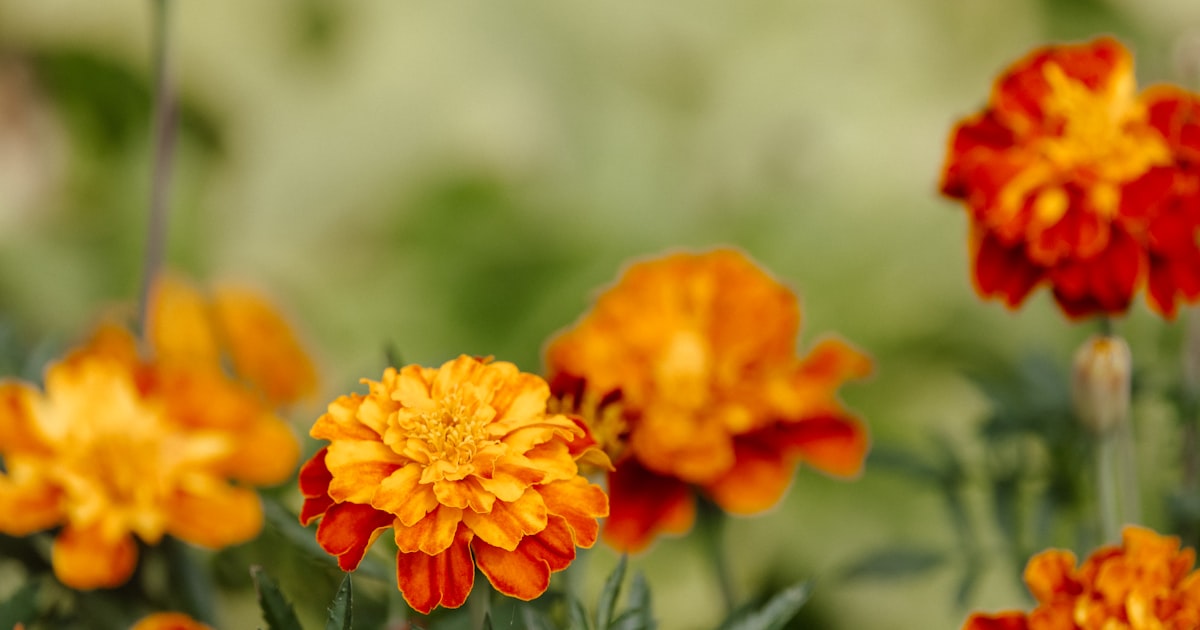
Marigolds might just be the hardest working flowers in the garden. They look cheerful, they smell pungent (in a good way, mostly), and they do an incredible amount of heavy lifting when it comes to pest control and pollinator attraction. If you are not growing marigolds alongside your veggies, you are missing out on one of the simplest upgrades you can make.
Let’s talk about why these bright little beauties deserve a place in every food garden.
Quick Facts
| Family | Asteraceae (Daisy family) |
| Sun | Full sun |
| Water | Moderate |
| Difficulty | Easy |
| Time to Flower | 6 to 8 weeks from seed |
| Plant Type | Annual |
French vs African Marigolds
When people say “marigold,” they usually mean one of two types:
- French marigolds (Tagetes patula): Compact plants, 20 to 30 cm tall, with smaller but abundant flowers. These are the kings of companion planting and the ones most studied for pest control.
- African marigolds (Tagetes erecta): Taller plants, 50 to 90 cm, with big, showy pompom flowers. Spectacular in borders and excellent for cut flowers.
Both are brilliant garden plants, but for companion planting purposes, French marigolds are your best bet. They have the strongest research backing for pest control benefits.
The Nematode Fighter
Here is where marigolds really shine. French marigolds release compounds from their roots called alpha-terthienyl that are toxic to root-knot nematodes, those microscopic soil pests that cause lumpy, knotted roots and sickly plants.
Research has shown that growing French marigolds as a dense cover crop for at least two months can significantly reduce nematode populations in the soil. This is particularly valuable for gardeners dealing with nematode problems in tomatoes, carrots, and other susceptible crops.
For maximum nematode-fighting effect:
- Plant French marigolds densely across the affected bed.
- Let them grow for a full season (at least 8 to 10 weeks).
- Chop and dig the plants into the soil at the end of the season.
- Follow with your susceptible crop the next season.
PLAN YOUR COMPANION PLANTING
Pair marigolds with the right veggies
VeggieCrush shows you the best companion planting combinations, helping you place marigolds exactly where they will do the most good in your garden.
Download the free appPest Control Powerhouse
Beyond nematodes, marigolds help manage pests in several ways:
- Whitefly deterrent. The strong scent of French marigolds can confuse and deter whiteflies, especially when planted near tomatoes and brassicas.
- Trap crop for aphids. Marigolds attract aphids to themselves, drawing them away from your veggies. This is a sacrifice worth making.
- Hoverfly magnet. The flowers attract hoverflies, whose larvae are voracious aphid eaters. So marigolds attract the pests AND the predators. Smart, right?
- Beneficial insect habitat. Ladybirds, lacewings, parasitic wasps, and other beneficial insects all love marigold flowers.
Growing Marigolds
Growing marigolds is about as simple as gardening gets. If you can garden at all, you can grow marigolds.
Sowing
- Direct sow seeds after the last frost, about 1 cm deep.
- Or start indoors 4 to 6 weeks before the last frost for earlier flowers.
- Space French marigolds 20 to 25 cm apart, African marigolds 30 to 40 cm apart.
- Germination takes about 5 to 7 days in warm soil.
Care
- Sun: Full sun is essential. Marigolds need at least 6 hours of direct sunlight.
- Water: Moderate. Water at the base of the plant rather than overhead to prevent fungal issues.
- Soil: Average garden soil is fine. Marigolds actually flower better in soil that is not too rich.
- Feeding: Rarely needed. Too much fertiliser produces lots of foliage and fewer flowers.
Deadheading
This is the one task that really pays off with marigolds. Pinch off spent flowers regularly and the plant will keep pumping out new blooms right through until frost. Stop deadheading and the plant puts its energy into seed production instead of flowering.
Companion Planting Combinations
Marigolds play well with almost everything. Here are the classic pairings:
- Tomatoes. The most popular combination. Marigolds help deter whiteflies and nematodes while attracting pollinators.
- Brassicas. Plant marigolds around broccoli, cabbage, and cauliflower to confuse cabbage white butterflies.
- Beans. Marigolds attract beneficial insects that prey on bean pests.
- Cucurbits. Pumpkins, zucchini, and cucumbers benefit from the pollinator attraction.
- Roses. Not a veggie, but marigolds planted around roses can help with aphid management.
GROW A HEALTHIER GARDEN
Build your garden's natural pest defence
VeggieCrush helps you integrate companion flowers like marigolds into your veggie patch for natural, chemical-free pest management.
Download the free appEdible Marigold Petals
Yes, Tagetes marigold petals are edible. They have a slightly citrusy, slightly bitter flavour. Pull the individual petals from the flower head (discard the green base, which is quite bitter) and scatter them in salads, rice dishes, or anywhere you want a splash of colour.
African marigold petals are also used as a natural food colouring, adding a golden yellow hue to dishes.
Seed Saving
Marigolds are one of the easiest flowers to save seed from. At the end of the season:
- Let some flower heads dry fully on the plant.
- Pluck the dried heads and pull them apart.
- Separate the seeds from the chaff.
- Store in a labelled paper envelope in a cool, dry spot.
Seeds remain viable for two to three years if stored well.
The Bottom Line
Marigolds are bright, cheerful, and ridiculously hardworking. They fight nematodes, attract beneficial insects, deter pests, and look beautiful doing it all. They cost almost nothing to grow from seed, they thrive with minimal care, and they make every veggie garden healthier and more productive.
Plant them everywhere. Seriously. Your garden will thank you.
Get the VeggieCrush App
Join thousands of Aussie gardeners growing better with personalised planting reminders, pest alerts, and expert advice.


Free to download on iOS and Android. No credit card required