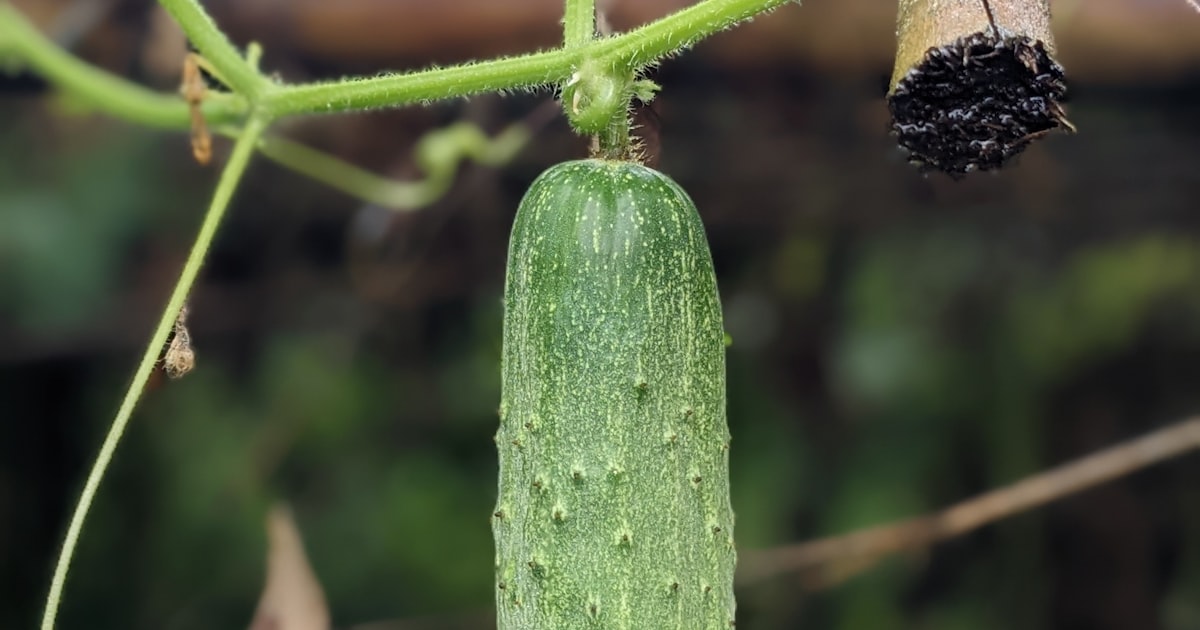
Is there anything more refreshing than a freshly picked cucumber on a hot Australian summer day? Crisp, cool, and satisfying in a way that shop-bought cucumbers just cannot match. Growing your own is easy, productive, and takes up surprisingly little space if you grow them vertically.
Let us get into everything you need to know to grow brilliant cucumbers at home.
Quick Facts
| Detail | Info |
|---|---|
| Family | Gourd (Cucurbitaceae) |
| Sun | Full sun (6+ hours) |
| Water | Regular, consistent |
| Difficulty | Easy |
| Weeks to Harvest | 8-12 weeks |
| Best Season | Spring, summer |
Bush vs Climbing Types
Just like tomatoes, cucumbers come in two growth habits.
Bush Cucumbers
Compact plants that stay relatively small and tidy. They do not need a trellis and are well-suited to containers and small gardens. The trade-off is that they produce fewer fruit overall and the harvest period is shorter.
Good bush varieties: Spacemaster, Bush Champion, Patio Snacker.
Climbing Cucumbers
These are the vigorous vine types that will happily scramble up a trellis, fence, or anything else they can grab onto with their tendrils. They produce more fruit over a longer period and the fruit tends to grow straighter and cleaner when hanging from a support.
Good climbing varieties: Straight Eight, Lebanese, Telegraph, Crystal Apple.
Why Trellis Growing is Brilliant
If you have the choice, grow your cucumbers on a trellis. Here is why:
- Saves space. A single trellis against a wall or fence takes up a fraction of the ground space compared to letting vines sprawl.
- Better airflow. Leaves dry faster, which means less fungal disease.
- Cleaner fruit. Cucumbers hanging in the air grow straight and stay off the damp ground, where they can rot or get nibbled by slugs.
- Easier harvesting. You can see the fruit clearly and pick them without hunting through a tangle of leaves on the ground.
A simple trellis can be as basic as some star pickets with wire mesh or string netting between them. Anything sturdy enough to support the weight of the vines and fruit will do.
Getting Started
When to Plant
Cucumbers are warm-season crops. They need warm soil (at least 18 degrees) and warm air to thrive. Here is a rough timing guide:
- Temperate (Melbourne, Adelaide, Perth): Plant October to January.
- Subtropical (Sydney, Brisbane): Plant September to February.
- Tropical (Cairns, Darwin): Plant March to September (dry season).
- Cool climate (Hobart, highlands): Plant November to January.
Sowing
You can sow cucumbers directly into the garden or start them in pots for transplanting. They germinate quickly in warm conditions (5 to 7 days).
- Sow seeds 2cm deep.
- Space plants 40 to 60cm apart (or closer if growing up a trellis).
- Cucumbers have delicate roots, so if transplanting, be gentle and disturb the root ball as little as possible.
PLANTING CALENDAR
Know the perfect time to plant cucumbers in your zone
VeggieCrush gives you a personalised planting calendar based on your location so you never sow too early or too late.
Download the free appPollination: Male and Female Flowers
Cucumbers produce separate male and female flowers on the same plant. This catches some gardeners off guard when the first batch of flowers appears and no fruit forms.
Male flowers appear first, usually a week or two before female flowers. They grow on thin stems and their job is to produce pollen.
Female flowers have a tiny cucumber-shaped swelling at their base (the ovary). This is the part that becomes the fruit, but only if the flower gets pollinated.
Pollination is done by bees and other insects carrying pollen from male to female flowers. If you are not getting fruit:
- Check for female flowers. They might not have appeared yet. Be patient.
- Encourage pollinators. Plant flowers nearby to attract bees.
- Hand pollinate. Use a small paintbrush or cotton bud to transfer pollen from a male flower to a female flower. It takes 30 seconds and works perfectly.
The Bitter Cucumber Problem
Nothing is more disappointing than biting into a cucumber and getting that awful bitter taste. Bitterness in cucumbers is caused by a compound called cucurbitacin, and it is triggered by stress.
Common causes of bitter cucumbers:
- Inconsistent watering. The number one culprit. A dry spell followed by a heavy watering causes the plant to produce cucurbitacin.
- Temperature extremes. Very hot days or cold nights stress the plant.
- Poor nutrition. Underfed plants are more prone to bitterness.
The fix: Water deeply and consistently. Mulch to maintain even soil moisture. Feed every 2 weeks with a liquid fertiliser. Harvest regularly to keep the plant producing.
If you do get a bitter cucumber, peel it and cut off the stem end (bitterness concentrates near the stem and just under the skin). The centre is usually fine.
Varieties for Australian Gardens
Lebanese Cucumber
The Australian salad staple. Smooth-skinned, no need to peel, sweet flavour. Compact fruit (about 15cm) perfect for eating fresh. Prolific producer.
Telegraph Cucumber
The long, slender type you see wrapped in plastic at the supermarket. Grows to 30cm or more. Mild flavour, thin skin. Best on a trellis where the fruit can hang straight.
Crystal Apple (Crystal Lemon)
A quirky Australian heritage variety. Round, pale green fruit about 10cm across. Sweet, crunchy, and fun to grow. Kids love them.
Gherkin (Cornichon)
Small, bumpy cucumbers specifically meant for the jar. Pick them at 5 to 8cm for the best results. Very productive plants.
Companion Planting
Cucumbers play nicely with several garden friends:
- Beans: Fix nitrogen in the soil, which cucumbers appreciate.
- Corn: Provides shade and a natural trellis for climbing varieties.
- Dill: Attracts beneficial insects and is said to improve cucumber flavour.
- Sunflowers: Attract pollinators and provide light shade.
- Radish: Quick-growing radishes fill the space between cucumber plants before the vines take over.
Avoid planting cucumbers near:
- Potatoes (compete for nutrients and can spread blight).
- Strong aromatic herbs like sage (can inhibit cucumber growth).
COMPANION PLANTING GUIDE
See what grows well with your cucumbers
VeggieCrush shows you the best companion plants for every crop in your garden, taking the guesswork out of garden planning.
Download the free appHarvesting
This is the fun part. And the rule is simple: pick them small.
Cucumbers are at their best when harvested young and firm. Once they start to turn yellow or get fat and seedy, the flavour declines and the texture becomes soft and watery.
- Lebanese: Pick at 10 to 12cm.
- Telegraph: Pick at 20 to 30cm.
- Crystal Apple: Pick at tennis-ball size.
- Gherkins: Pick at 5 to 8cm.
Use secateurs or scissors to cut the fruit from the vine. Pulling can damage the plant.
Harvest every 2 to 3 days during peak production. Regular picking encourages the plant to keep producing. If you leave mature fruit on the vine, the plant thinks its job is done and slows down.
Common Problems
Powdery Mildew
A white, powdery coating on leaves, usually appearing in late summer when days are warm and nights are cool. Improve airflow, avoid overhead watering, and spray with a milk solution (1 part milk to 9 parts water) as a preventative.
Yellow Leaves
Often a sign of overwatering or nutrient deficiency. Check drainage and feed with a balanced liquid fertiliser.
Misshapen Fruit
Usually caused by incomplete pollination or inconsistent watering. Ensure good pollinator activity and keep moisture levels steady.
The Bottom Line
Cucumbers are one of the easiest and most rewarding warm-season crops you can grow. Give them sunshine, consistent water, something to climb, and a steady supply of bee visitors, and they will keep pumping out crisp, delicious fruit all summer long.
Grow them up, pick them small, and eat them fresh. That is the cucumber life.
Get the VeggieCrush App
Join thousands of Aussie gardeners growing better with personalised planting reminders, pest alerts, and expert advice.


Free to download on iOS and Android. No credit card required