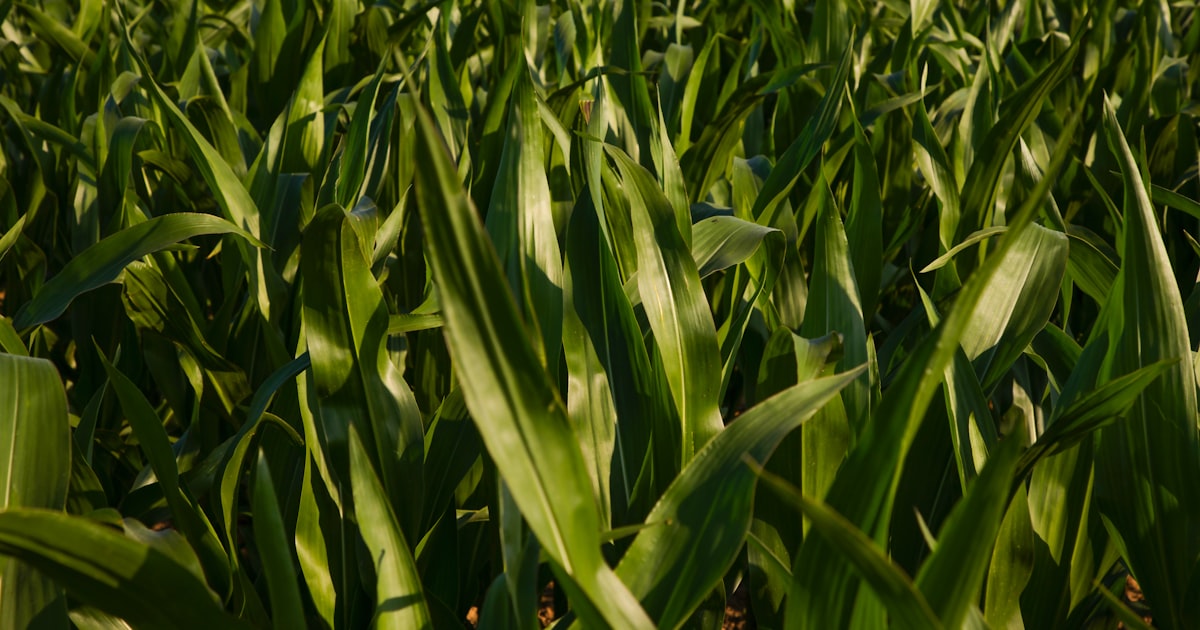
There are few things in the veggie garden that beat the taste of freshly picked corn. We’re talking cobs so sweet and tender that you could eat them raw, straight off the stalk. The sugars in corn start converting to starch the moment it’s picked, which is why home-grown corn tastes completely different from anything you’ll find in the shops.
It does take up a bit of space, but if you’ve got the room, it’s worth every centimetre.
Quick Facts
| Family | Grass (Poaceae) |
| Sun | Full sun (8+ hours ideal) |
| Water | Regular, especially during tasselling and cob development |
| Difficulty | Moderate |
| Time to Harvest | 12 to 16 weeks |
| Best Planting Time | Spring to early summer |
The Golden Rule: Plant in Blocks, Not Rows
This is the single most important thing to know about growing corn. Corn is wind-pollinated. Those tassels at the top of the plant release pollen, which needs to fall onto the silks of the developing cobs below. If you plant corn in a single long row, the pollen blows sideways and misses most of the silks. The result? Patchy cobs with lots of missing kernels.
Instead, plant corn in a block formation of at least 4 rows by 4 rows. This creates a dense cluster where pollen has a much better chance of reaching every silk, no matter which direction the wind blows.
A minimum block of 16 plants is recommended. More is better.
When to Plant in Australia
Corn is a warm season crop that needs heat, sunshine, and frost-free conditions. It wants soil temperatures of at least 18 degrees Celsius for reliable germination.
- Tropical and subtropical zones: Plant from August to February
- Temperate zones: Plant from October to December
- Cool climates: Plant from November to December (choose quick-maturing varieties)
The old Aussie saying goes, “knee high by Christmas,” meaning your corn should be at least knee-height by midsummer. If it’s not, it may have been planted too late or the conditions have been too cool.
Planting
Direct sow corn seeds about 5cm deep and 20 to 30cm apart within your block. Rows should be about 60 to 75cm apart. Corn has a relatively poor germination rate compared to some veggies, so plant 2 seeds per spot and thin to the strongest seedling once they’re established.
Corn doesn’t transplant well because it has a sensitive root system, so direct sowing is the way to go.
Space: The Honest Truth
Corn is a space-hungry crop. A block of 16 plants takes up roughly 1.5 square metres. A block of 36 plants (6 by 6) needs about 3.5 square metres. For a small garden, that’s a significant commitment.
Is it worth it? That depends on your priorities. If space is tight, you might get more overall food value from a bed of mixed veggies. But if you’ve got the room and you love fresh corn, there’s nothing quite like it.
PLAN YOUR SUMMER GARDEN
See if corn fits in your garden plan
VeggieCrush's garden planner helps you visualise how much space crops need, so you can decide what's worth growing in your patch.
Download the free appSoil and Feeding
Corn is a hungry plant. It’s a heavy feeder, particularly of nitrogen. Before planting, work in plenty of compost and aged manure. Once the plants are about 30cm tall, side-dress with a nitrogen-rich fertiliser (blood and bone works well) and repeat when the tassels start to appear.
Mulch around the base of plants to retain moisture and suppress weeds, but keep the mulch a few centimetres away from the stems.
Watering
Consistent moisture is important throughout the growing season, but it’s absolutely critical during two key stages:
- Tasselling: When the tassels emerge at the top of the plant
- Silking and cob development: When the silks appear and the cobs are filling out
Water stress during these stages leads to poor pollination and underfilled cobs. Aim for deep, regular watering rather than frequent light sprinkles.
The Three Sisters Companion Planting
Corn is a star player in the famous Three Sisters planting method:
- Corn provides a living support pole for climbing beans
- Climbing beans fix nitrogen that feeds the corn
- Pumpkin or squash sprawls at the base, shading soil and suppressing weeds
To make it work: plant corn first and let it reach about 15cm tall. Then sow climbing beans at the base of each corn stalk and plant pumpkin or squash seeds between the corn rows. The timing is important; if the beans go in too early, they’ll outgrow the corn before it’s strong enough to support them.
Varieties for Australian Gardens
Supersweet Varieties
These have been bred for maximum sugar content. They’re incredibly sweet but can be slightly more finicky to grow. Seeds need warmer soil to germinate.
- Honey and Pearl: Bicolour (white and yellow kernels), excellent flavour
- Early Chief: Quick to mature, good for shorter seasons
Standard Sweet Corn
Good, reliable sweetness with easier germination. A great choice for beginners.
- Golden Bantam: Classic heirloom with rich corn flavour
- True Gold: Reliable open-pollinated variety
Baby Corn
If you’re short on space, you can grow baby corn by planting regular varieties at closer spacing and harvesting the tiny cobs just as the silks appear.
VARIETY FINDER
Discover the best corn varieties for your region
VeggieCrush recommends varieties that perform well in your specific climate zone, so you get the sweetest cobs possible.
Download the free appHarvesting: Getting the Timing Right
Corn is ready to harvest about 3 weeks after the silks first appear. Here are the signs to look for:
- Silks turn brown and dry: This means pollination is complete and the kernels are developing
- The squeeze test: Gently peel back a small section of husk and press a kernel with your fingernail. If milky liquid squirts out, it’s ready. If the liquid is clear, wait a few more days. If the kernel is doughy and dry, you’ve waited too long.
- Cob feels firm: The cob should feel full and firm through the husk
To harvest, grab the cob firmly and twist it downward sharply, snapping it off the stalk.
Common Issues
Poor kernel development (patchy cobs): Almost always a pollination problem. Plant in blocks, not rows, and ensure you have at least 16 plants.
Corn earworm: Caterpillars that burrow into the tip of the cob. You’ll often find them when you peel back the husk. A drop of vegetable oil on the silks when they first appear can deter earworm. The damage is usually limited to the tip, so just cut it off and enjoy the rest.
Lodging (plants falling over): Corn has shallow roots and can topple in strong winds. Mounding soil around the base when plants are young encourages stronger root anchoring. Planting in a sheltered spot helps too.
Rust: Orange-brown spots on leaves, usually late in the season. It rarely affects the harvest and is generally cosmetic.
The Bottom Line
Growing corn takes space, patience, and attention to pollination. But the reward, biting into a cob of home-grown corn so sweet it barely needs butter, is one of summer’s greatest pleasures. Plant it in blocks, keep it watered, and pick it fresh. You’ll never look at supermarket corn the same way again.
Happy growing, and enjoy every golden kernel.
Get the VeggieCrush App
Join thousands of Aussie gardeners growing better with personalised planting reminders, pest alerts, and expert advice.


Free to download on iOS and Android. No credit card required