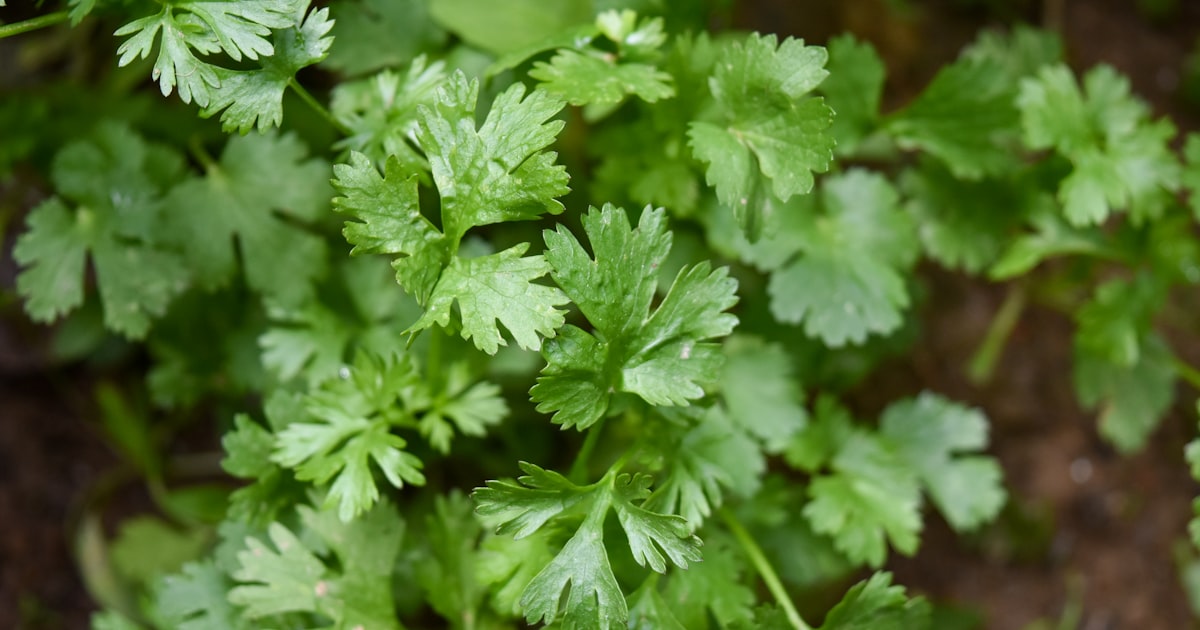
Coriander. No other herb divides a dinner table quite like this one. You either love its bright, citrusy flavour in curries, tacos, and salads, or you think it tastes like someone squirted dish soap on your food. There is a genuine genetic reason for that divide (we will get to it), but if you are in the “love it” camp, growing your own is absolutely worth the effort.
Fair warning: coriander can be a bit dramatic. It bolts at the first sign of warmth, throws a tantrum if you try to transplant it, and generally behaves like it has somewhere better to be. But with the right approach, you can keep a steady supply of fresh leaves going for months.
Quick Facts
| Detail | Info |
|---|---|
| Family | Carrot/Parsley (Apiaceae) |
| Sun | Partial shade to full sun |
| Water | Regular, consistent |
| Difficulty | Moderate |
| Weeks to Harvest | 6-8 weeks (leaves) |
| Best Season | Autumn, winter, spring |
The Bolting Problem
Let us address the elephant in the garden bed. Coriander bolts. A lot.
Bolting means the plant decides it is time to flower and make seeds instead of producing the leafy growth you actually want. Once it bolts, the leaves become thin, feathery, and bitter. The plant is essentially saying, “I am done here, time to make babies.”
What triggers bolting:
- Heat (anything above about 25 degrees)
- Long daylight hours
- Transplant shock
- Root disturbance
- Stress from dry soil
In Australian conditions, this means coriander is primarily a cool-season herb. Summer growing is possible in cooler parts of the country, but for most of us, autumn through spring is the sweet spot.
How to Slow Bolting Down
- Grow in partial shade. Morning sun with afternoon shade is ideal, especially in warmer regions.
- Keep the soil consistently moist. Dry soil stresses the plant and triggers bolting.
- Choose slow-bolt varieties. Varieties like Slow Bolt, Leisure, and Santo are bred to stay leafy longer.
- Mulch well. Keep roots cool with a layer of straw or sugar cane mulch.
- Harvest regularly. Picking the outer leaves encourages the plant to keep producing new growth rather than flowering.
Sow Direct (Always)
Coriander absolutely hates being transplanted. It has a long taproot that does not recover well from disturbance. Every time you see coriander seedlings in punnets at the nursery, just know that a significant percentage of them will bolt within days of being planted out, purely from the shock.
The solution: always sow directly where you want it to grow. Whether that is a garden bed, a pot, or a window box, put the seeds straight into their final home.
How to sow:
- Gently crush the round seeds to split them in half (each seed is actually two seeds fused together).
- Sow about 1cm deep and 2 to 3cm apart.
- Water gently and keep the soil moist.
- Germination takes 7 to 14 days (it is not the fastest).
- Thin seedlings to about 5cm apart once they are a few centimetres tall.
SUCCESSION SOWING REMINDERS
Never run out of fresh coriander
VeggieCrush reminds you when it is time to sow your next batch of coriander so you always have fresh leaves on hand.
Download the free appSuccession Sowing: The Secret to Endless Coriander
Because individual coriander plants have a relatively short leafy lifespan (6 to 8 weeks before bolting), the trick is to sow a new batch every 2 to 3 weeks. By the time your first batch starts to bolt, the next one is ready to harvest. And by the time that one bolts, the one after that is up and running.
It is a rolling production line of fresh coriander, and it works beautifully.
Keep a dedicated spot in the garden or a couple of pots specifically for coriander succession. Three to four pots in rotation will keep a coriander-loving household happy year-round (outside of the hottest summer months).
Slow-bolt Varieties
Not all coriander is created equal. Some varieties have been specifically bred to resist bolting for longer:
- Slow Bolt: Does what it says on the packet. Stays leafy for weeks longer than regular coriander.
- Leisure: Popular slow-bolt variety with good leaf production.
- Santo: Large leaves, slow to bolt, and widely available in Australia.
- Calypso: One of the slowest to bolt. Excellent for warm-climate growers.
If you have been growing generic coriander and battling constant bolting, try one of these. The difference is noticeable.
Growing for Seed
Here is a twist: when your coriander does bolt (and it will), do not rip it out in frustration. Let it flower and set seed. Coriander seed is a completely different spice from fresh coriander leaf, and it is used in countless recipes, from Indian curries to Middle Eastern dishes.
The flowers are also excellent for attracting beneficial insects. Hoverflies, parasitic wasps, and lacewings all love coriander flowers.
Harvesting seed:
- Let the flowers fade and the seed heads turn brown.
- Cut the seed heads and place them upside down in a paper bag.
- Leave them to dry for a week or two.
- Shake the bag to release the seeds.
- Store in an airtight container. They keep for years.
You can also replant some of these seeds for your next crop. Free coriander forever.
Why Some People Taste Soap
Roughly 4 to 14% of the population perceives coriander as tasting like soap. This is not a personality flaw or a lack of sophistication. It is genetic. Specific variations in olfactory receptor genes (particularly OR6A2) make some people hypersensitive to the aldehyde compounds in coriander leaves.
If you are one of these people, no amount of “just try it, you will learn to like it” will change the fundamental way your brain processes the flavour. It is literally hardwired.
The good news? Coriander seeds do not trigger the same response, so you might still enjoy ground coriander in cooking even if the fresh leaves are not for you.
Container Growing
Coriander is excellent in pots, which makes it perfect for balcony and courtyard gardening.
- Use a pot at least 20cm deep (that taproot needs room).
- Good quality potting mix with added compost.
- Position in a spot with morning sun and afternoon shade.
- Water regularly; pots dry out faster than garden beds.
- Sow densely and harvest as a cut-and-come-again crop.
A wide, shallow pot (like a large salad bowl planter) is perfect for growing coriander as a thick patch of leaves.
HERBS IN SMALL SPACES
Grow coriander (and heaps more) on your balcony
VeggieCrush has container-specific growing guides so you can grow fresh herbs even in the smallest spaces.
Download the free appCommon Problems
Bolting Too Fast
Covered above. Shade, moisture, slow-bolt varieties, and succession sowing are your best tools.
Yellowing Leaves
Usually a sign of overwatering or poor drainage. Make sure your soil drains well and do not let pots sit in saucers of water.
Aphids
Coriander can attract aphids, especially on new growth. A blast from the hose or a spray of diluted neem oil sorts them out.
Poor Germination
Old seeds or seeds that were not cracked before sowing can be slow to sprout. Use fresh seed, crack them gently, and keep the soil consistently moist.
The Bottom Line
Coriander is a herb with personality. It bolts when it is hot, refuses to be transplanted, and divides families at the dinner table. But for those of us who love it, there is no substitute for a big handful of freshly picked coriander leaves thrown on top of a bowl of pho or a plate of tacos.
Master the succession sowing technique, choose slow-bolt varieties, and keep your plants cool and well-watered. Do that, and you will have fresh coriander whenever you need it. Well, almost whenever. Even coriander needs a summer holiday.
Get the VeggieCrush App
Join thousands of Aussie gardeners growing better with personalised planting reminders, pest alerts, and expert advice.


Free to download on iOS and Android. No credit card required