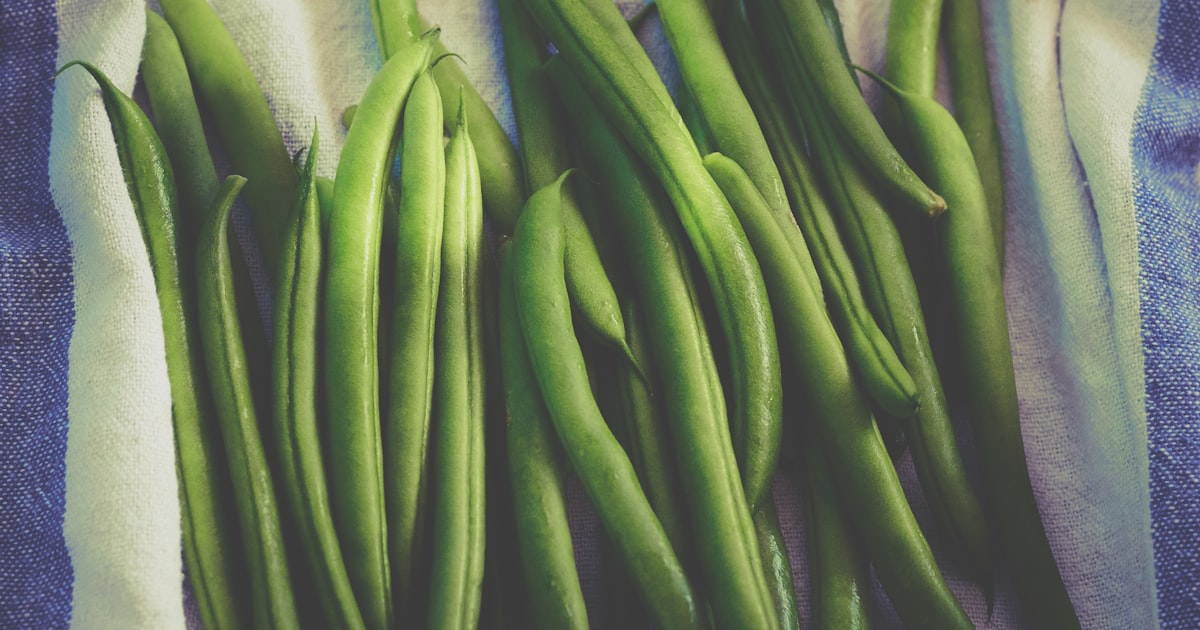
There’s something wonderfully satisfying about growing climbing beans. You pop a big, chunky seed into the soil, and within days it’s shooting up, twisting and climbing toward the sky like it has somewhere important to be. Climbing beans are one of the most rewarding crops you can grow: they’re easy, productive, and absolutely beautiful on a trellis.
Let’s get you started.
Quick Facts
| Family | Legume (Fabaceae) |
| Sun | Full sun (6+ hours) |
| Water | Moderate, consistent moisture |
| Difficulty | Easy |
| Time to Harvest | 10 to 12 weeks |
| Best Planting Time | Spring and summer (after last frost) |
Climbing Beans vs Bush Beans: What’s the Difference?
Both are delicious, but they grow quite differently.
Bush beans are compact, self-supporting plants that produce a concentrated harvest over a few weeks. They’re great for small spaces and quick crops.
Climbing beans need support (a trellis, tepee, or fence) but they reward you with a much longer harvest period and significantly more yield per plant. A single climbing bean plant can produce for 8 to 12 weeks if you keep picking regularly.
If you’ve got the vertical space, climbers are almost always the better investment of your time and garden real estate.
When and How to Plant
Climbing beans are warm season crops. They need soil temperatures above 18 degrees Celsius to germinate well, and they absolutely hate frost. Wait until all danger of frost has passed before planting.
In most parts of Australia:
- Tropical and subtropical: Plant from August to March
- Temperate zones: Plant from October to January
- Cool climates: Plant from November to December
Always direct sow climbing beans. They don’t transplant well because their roots are sensitive to disturbance. Poke the seed about 3 to 5cm deep into the soil, water gently, and wait. They’ll pop up within 7 to 10 days.
Space seeds about 10 to 15cm apart along your trellis or around your tepee supports.
Trellis and Support Options
Climbing beans need something to grab onto, and they’ll reach 2 to 3 metres tall. Here are some popular support options:
Bean Tepee
The classic. Push 3 to 5 tall bamboo stakes into the ground in a circle and tie them together at the top. Plant 2 to 3 seeds at the base of each stake. Kids love these because they create a secret green hideaway by mid-summer.
Trellis Panel
A flat trellis against a fence or wall works brilliantly. Use wire mesh, string netting, or even chicken wire attached to a frame. This is great for narrow spaces along boundaries.
String Trellis
Run horizontal wires or a top bar between two posts, then hang strings down from the top bar. Tie the bottom of each string to a peg in the ground. The beans will climb the strings naturally.
Existing Fence
If you’ve got a chain-link or wire fence, just plant beans along the base and let them do their thing. Free trellis!
VERTICAL GARDENING MADE SIMPLE
Plan your climbing crops with VeggieCrush
Our garden planner helps you map out vertical growing spaces and reminds you when it's time to sow climbing beans in your climate zone.
Download the free appNitrogen-Fixing: Beans Feed Your Soil
Here’s a bonus that makes legumes extra special. Climbing beans (like all legumes) have a superpower: they form a partnership with soil bacteria called rhizobia that capture nitrogen from the air and convert it into a form plants can use. This means beans actually improve your soil while they grow.
When your bean plants are finished for the season, chop them off at ground level and leave the roots in the soil. The nitrogen stored in those root nodules will break down and feed whatever you plant next. Follow beans with a nitrogen-hungry crop like leafy greens or brassicas for a natural fertility boost.
The Three Sisters: An Ancient Companion Planting Method
Climbing beans are a key player in the famous “Three Sisters” planting method used by Indigenous peoples of the Americas for thousands of years. The trio works like this:
- Corn provides a living pole for the beans to climb
- Climbing beans fix nitrogen that feeds the corn and pumpkin
- Pumpkin/squash sprawls at the base, shading the soil and suppressing weeds
It’s a brilliant example of companion planting where each crop supports the others. If you’ve got the space, it’s well worth trying. Plant the corn first, let it get about 15cm tall, then plant the beans and pumpkin around it.
Picking: The Golden Rule
Here’s the single most important thing to know about climbing beans: pick them regularly and they’ll keep producing. If you leave mature pods on the vine, the plant thinks its job is done (it’s made seeds for the next generation) and it slows down or stops producing new pods.
Pick every 2 to 3 days during peak production. Harvest when pods are firm, crisp, and you can just see the outline of small beans inside. If the seeds are bulging and the pod is tough and stringy, you’ve left it too long.
Great Varieties for Australia
- Blue Lake: A classic all-rounder with round, stringless pods. Reliable and prolific.
- Purple King: Gorgeous purple pods that turn green when cooked. Kids love the colour.
- Scarlet Runner: Stunning red flowers, large flat pods. Also great as an ornamental.
- Lazy Housewife: An heirloom with a brilliant name. Stringless, meaty pods.
- Rattlesnake: Speckled purple and green pods with excellent flavour.
FIND YOUR PERFECT VARIETY
Browse climbing bean varieties in VeggieCrush
Discover which climbing bean varieties grow best in your area, with planting dates tailored to your local climate.
Download the free appSaving Seeds for Next Year
Climbing beans are one of the easiest crops to save seeds from. Simply leave a few of your best pods on the vine at the end of the season. Let them dry completely on the plant until the pods are papery and brown and the beans inside rattle when shaken.
Pick the dry pods, shell out the beans, and store them in a paper envelope or jar in a cool, dry place. They’ll stay viable for 3 to 4 years, though fresh seed always germinates best.
This is a wonderful way to become more self-sufficient and save a few dollars each season.
Common Problems
No flowers/pods: Usually too much nitrogen fertiliser (ironic, since beans make their own). Avoid high-nitrogen feeds and let the beans do their thing.
Aphids: Small clusters on new growth. Blast them off with a strong jet of water or use a soapy spray.
Bean fly: A pest in warmer regions that attacks seedlings at the base. Mounding soil around the base of young plants can help. Healthy, fast-growing plants usually outgrow the damage.
Powdery mildew: White dusty coating on leaves, usually late in the season. Improve airflow and avoid overhead watering.
The Bottom Line
Climbing beans are one of the most generous plants in the veggie garden. Give them something to climb, keep them picked, and they’ll reward you with armfuls of crisp, fresh beans all summer long. They’re perfect for beginners, fantastic for kids, and a genuine joy to grow.
Get those seeds in the ground and watch them race for the sky.
Get the VeggieCrush App
Join thousands of Aussie gardeners growing better with personalised planting reminders, pest alerts, and expert advice.


Free to download on iOS and Android. No credit card required