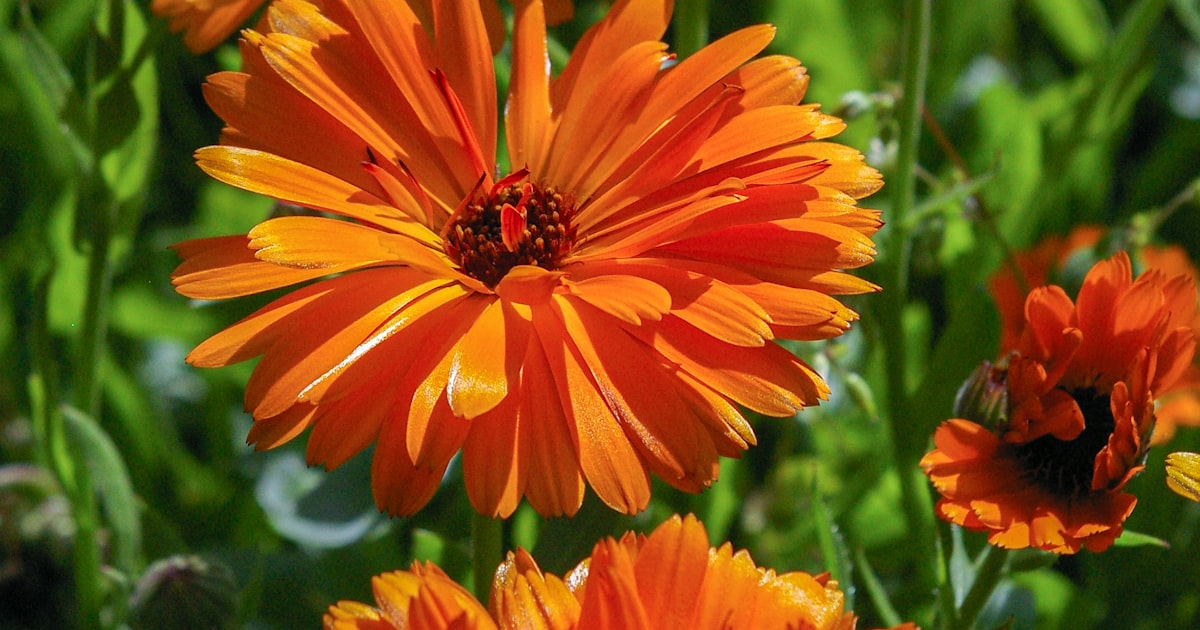
Calendula is one of those rare plants that is beautiful enough for the front garden, useful enough for the medicine cabinet, and tasty enough for the kitchen. Also known as pot marigold, this bright, cheerful flower has been grown in gardens for centuries, and for very good reason.
Let’s explore how to grow calendula and make the most of everything it has to offer.
Quick Facts
| Family | Asteraceae (Daisy family) |
| Sun | Full sun |
| Water | Moderate |
| Difficulty | Easy |
| Time to Flower | 6 to 8 weeks from seed |
| Plant Type | Annual (self-seeding) |
Wait, Is It a Marigold?
This is one of the most common garden confusions. Calendula (Calendula officinalis) is often called “pot marigold,” but it is a completely different plant from the marigolds you typically see in veggie gardens (Tagetes species).
They are both in the Daisy family (Asteraceae), but that is where the family resemblance ends. Calendula has simpler, daisy-like flowers, softer foliage, and a milder scent. Tagetes marigolds have a much stronger, pungent aroma and those dense, ruffly flower heads.
Both are excellent garden plants. They just do different things.
Why Grow Calendula?
Edible Flowers
Calendula petals have been used in cooking for centuries. They are sometimes called “poor man’s saffron” because the bright orange petals add a golden colour to rice, soups, and stews in a similar (though milder) way to saffron.
The flavour is subtle, slightly peppery with a hint of tanginess. Pull individual petals from the flower head and scatter them in:
- Salads
- Rice dishes and risotto
- Soups and stews
- Baked goods (for colour)
- Herbal teas
- Butter (calendula butter is gorgeous)
Medicinal Uses
Calendula has a long history in herbal medicine, particularly for skin care. The flowers contain compounds with anti-inflammatory, antimicrobial, and wound-healing properties.
Common uses include:
- Calendula salve/balm. Infuse dried petals in oil, then combine with beeswax for a soothing skin balm that is wonderful for dry, irritated, or minor wounds.
- Calendula tea. Made from dried petals, traditionally used as a gentle herbal tea.
- Infused oil. Steep dried petals in a carrier oil (like olive or sweet almond) for four to six weeks for a versatile skin care oil.
Companion Planting Benefits
Calendula is a useful companion plant that:
- Attracts beneficial insects like hoverflies, lacewings, and parasitic wasps
- Draws in pollinators with its bright, open flowers
- May help deter some pest insects with its mild scent
- Acts as a trap crop for aphids (they love calendula, which can draw them away from your veggies)
DISCOVER COMPANION PLANT COMBOS
Pair calendula with your favourite veggies
VeggieCrush shows you the best companion planting combinations so you can place calendula where it will do the most good in your garden.
Download the free appHow to Grow Calendula
When to Sow
Calendula is a cool-season flower that performs best in autumn, winter, and spring in most Australian climates. It does not love extreme heat and will often stop flowering or become leggy and tired during the hottest months.
- Temperate areas: Sow in autumn (March to May) for winter and spring flowers.
- Subtropical areas: Sow in autumn and winter for the best results.
- Tropical areas: Sow in the dry season (May to August).
- Cool/alpine areas: Sow in early spring (September to October) once frosts ease.
Sowing
Calendula is best sown directly where you want it to grow, though it transplants easily enough as young seedlings.
- Sow seeds about 1 cm deep in a sunny spot.
- Space plants 20 to 30 cm apart.
- Water in gently and keep moist until germination (7 to 14 days).
- That is genuinely it. Calendula is not demanding.
Care
- Sun: Full sun for the best flowering. Will tolerate light shade but may get leggy.
- Water: Moderate. Keep soil consistently moist but not waterlogged.
- Soil: Average garden soil is fine. Good drainage helps.
- Feeding: Light feeding only. Too much nitrogen produces lush leaves at the expense of flowers.
Deadheading for More Blooms
This is the key to keeping calendula flowering for as long as possible. Pick or pinch off spent flowers regularly and the plant will continue producing new blooms for months.
If you stop deadheading, the plant shifts its energy to seed production and flowering slows dramatically. The good news is that picking flowers for the kitchen counts as deadheading, so the more you use them, the more you get.
Self-Seeding Magic
Calendula self-seeds freely, which is one of the loveliest things about it. Let a few flowers go to seed at the end of the season, and new plants will pop up the following autumn without you lifting a finger.
The curled, claw-like seeds are easy to spot and collect if you want to control where they grow. But honestly, letting calendula naturalise through your garden beds is a wonderful approach. Pull out any that pop up in inconvenient spots and enjoy the rest.
TRACK YOUR EDIBLE FLOWERS
Log your calendula harvest and uses
VeggieCrush helps you track when your calendula flowers, when to harvest for drying, and how to make the most of this versatile plant.
Download the free appHarvesting and Drying Flowers
If you want to use calendula petals for cooking, tea, or salves, drying them properly ensures you have a supply all year round.
- Harvest fully open flowers on a dry, sunny day.
- Spread flower heads in a single layer on a drying rack, screen, or tray.
- Dry in a warm, well-ventilated spot out of direct sunlight. A food dehydrator on a low setting also works well.
- Store fully dried flowers in an airtight glass jar in a cool, dark place. They keep for about a year.
You can dry the whole flower heads or pull individual petals off before drying. Whole heads take longer but are easier to handle.
The Bottom Line
Calendula is a triple threat: edible, medicinal, and a genuine asset to your garden’s ecosystem. It is ridiculously easy to grow, self-seeds to come back year after year, and produces a steady supply of gorgeous orange and yellow blooms that brighten up even the dreariest winter day.
Grow some for the bees, some for the kitchen, some for the medicine cabinet, and plenty just for the joy of looking at them. Your garden (and your salads) will be all the better for it.
Get the VeggieCrush App
Join thousands of Aussie gardeners growing better with personalised planting reminders, pest alerts, and expert advice.


Free to download on iOS and Android. No credit card required