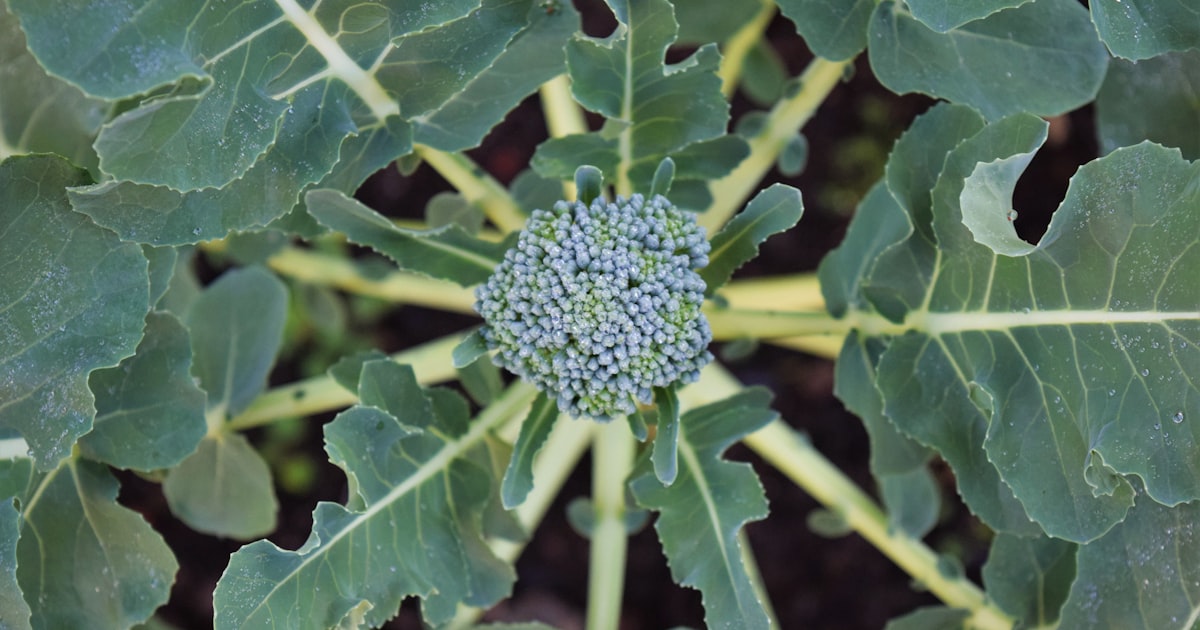
If there’s one veggie that earns the title of “superfood” without any marketing hype, it’s broccoli. Packed with vitamins, minerals, and that satisfying crunch, it’s a cool season champion that absolutely thrives in the Australian autumn and winter garden. And here’s the best part: home-grown broccoli tastes nothing like the sad, rubbery stuff you find in the supermarket.
Let’s get you growing some.
Quick Facts
| Family | Mustard/Brassica (Brassicaceae) |
| Sun | Full sun (6+ hours) |
| Water | Regular, consistent moisture |
| Difficulty | Moderate |
| Time to Harvest | 12 to 16 weeks |
| Best Planting Time | Autumn and early winter |
Why Grow Broccoli?
Broccoli is one of those crops that rewards patience. It takes a little longer than your quick leafy greens, but the payoff is huge. You get a big, beautiful main head, and then (if you play your cards right) weeks of bonus side shoots. One plant can keep producing for months.
Plus, there’s genuinely nothing like walking out to your garden, snapping off a fresh head of broccoli, and eating it within the hour. The flavour is sweeter, nuttier, and completely different from anything store-bought.
When to Plant in Australia
Broccoli is a cool season crop through and through. It loves mild days and cool nights. Here’s a rough guide by region:
- Tropical and subtropical zones: Plant from March to May
- Temperate zones: Plant from February to June
- Cool climates: Plant from January to April
If you plant too late into winter, the cold can slow growth significantly. If you plant too early in warm weather, the heads can “bolt” and flower before they’ve properly formed.
Seeds vs Seedlings
Both work, but seedlings give you a head start (pun intended).
Starting from seed: Sow seeds into trays about 5 to 6 weeks before you want to transplant. Keep them in a sheltered spot with good light. Transplant when they have 4 to 6 true leaves.
Buying seedlings: This is the faster route. Grab healthy looking seedlings from your local nursery and transplant straight into the garden. Just make sure they haven’t been sitting in tiny punnets too long, as root-bound seedlings struggle to establish.
Soil and Positioning
Broccoli is a hungry plant. It wants rich, well-drained soil with plenty of organic matter. Before planting, dig in some compost and aged manure. A slightly acidic to neutral soil (pH 6.0 to 7.0) is ideal.
Space your plants about 40 to 50cm apart. They get big, and good airflow between plants helps prevent fungal issues.
PLAN YOUR WINTER GARDEN
VeggieCrush makes cool season planting easy
Get personalised planting reminders for broccoli and other brassicas based on your exact climate zone.
Download the free appWatering and Feeding
Consistency is the name of the game. Broccoli doesn’t like drying out, and inconsistent watering can cause stress that leads to poor head formation. Aim for deep, regular watering rather than frequent light sprinkles.
Feed every 2 to 3 weeks with a balanced liquid fertiliser or side-dress with compost. Broccoli is a heavy feeder, especially as the head begins to form. A good dose of nitrogen early on helps build strong, leafy growth.
The Main Event: Harvesting
This is where timing matters most. You want to harvest the main head before the tiny buds start to open into yellow flowers. Once those flowers appear, the broccoli becomes bitter and the texture goes downhill fast.
Look for a head that’s tight, firm, and deep green. The individual buds should be compact and uniform. Cut the main head with about 10 to 15cm of stem attached, using a sharp knife at an angle (this helps water run off the cut and prevents rot).
Side Shoots: The Gift That Keeps Giving
Here’s where broccoli really shines. After you harvest the main head, don’t pull the plant out! Leave it in the ground and keep watering and feeding it. Within a week or two, smaller side shoots will start forming along the stem.
These side shoots are just as delicious as the main head, and many gardeners reckon they’re even tastier. You can keep harvesting side shoots for 6 to 8 weeks, sometimes longer.
Dealing with Cabbage White Butterflies
If you grow brassicas in Australia, you will meet the cabbage white butterfly. Those pretty white butterflies fluttering around your garden? They’re laying eggs on your broccoli. The green caterpillars that hatch will munch through your leaves in no time.
The best defence is exclusion netting. Drape fine mesh netting over your broccoli (supported by hoops or stakes so it doesn’t rest on the plants) and seal the edges. This physically prevents the butterflies from reaching your plants.
If caterpillars do get through, pick them off by hand or use an organic spray like Dipel (Bacillus thuringiensis), which targets caterpillars without harming beneficial insects.
PEST ALERT REMINDERS
Stay one step ahead of the cabbage whites
VeggieCrush sends timely pest alerts so you can protect your brassicas before the damage is done.
Download the free appCompanion Planting
Broccoli plays well with quite a few garden mates:
- Dill: Attracts beneficial insects that prey on cabbage caterpillars
- Onions and garlic: Their strong scent helps confuse and deter pests
- Celery: A great neighbouring plant that doesn’t compete heavily
- Chamomile: Said to improve the flavour of brassicas (and it’s lovely to look at)
Avoid planting near: Strawberries, tomatoes, and other heavy feeders that will compete for nutrients.
Common Issues
Buttoning (tiny, premature heads): Usually caused by stress, often from transplant shock, inconsistent watering, or temperature swings. Keep conditions as stable as possible.
Hollow stems: Can indicate a boron deficiency. A seaweed solution applied every few weeks usually sorts this out.
Yellowing leaves: Could be nitrogen deficiency or simply older leaves dying off naturally. Feed regularly and remove yellowing leaves to improve airflow.
Varieties Worth Trying
- Green Magic: Reliable, good side shoot production, suits most Australian climates
- Calabrese: The classic Italian variety, great flavour
- Broccolini/Tenderstem: Technically a broccoli hybrid, produces lots of slender, tender stems
- Purple Sprouting: Beautiful purple heads that turn green when cooked, very cold-hardy
The Bottom Line
Broccoli isn’t the fastest crop in the garden, but it’s one of the most rewarding. Get the timing right, keep the caterpillars at bay, and you’ll be eating fresh, nutrient-packed broccoli all through the cooler months. And don’t forget those side shoots. They’re the real bonus of growing your own.
Happy growing!
Get the VeggieCrush App
Join thousands of Aussie gardeners growing better with personalised planting reminders, pest alerts, and expert advice.


Free to download on iOS and Android. No credit card required