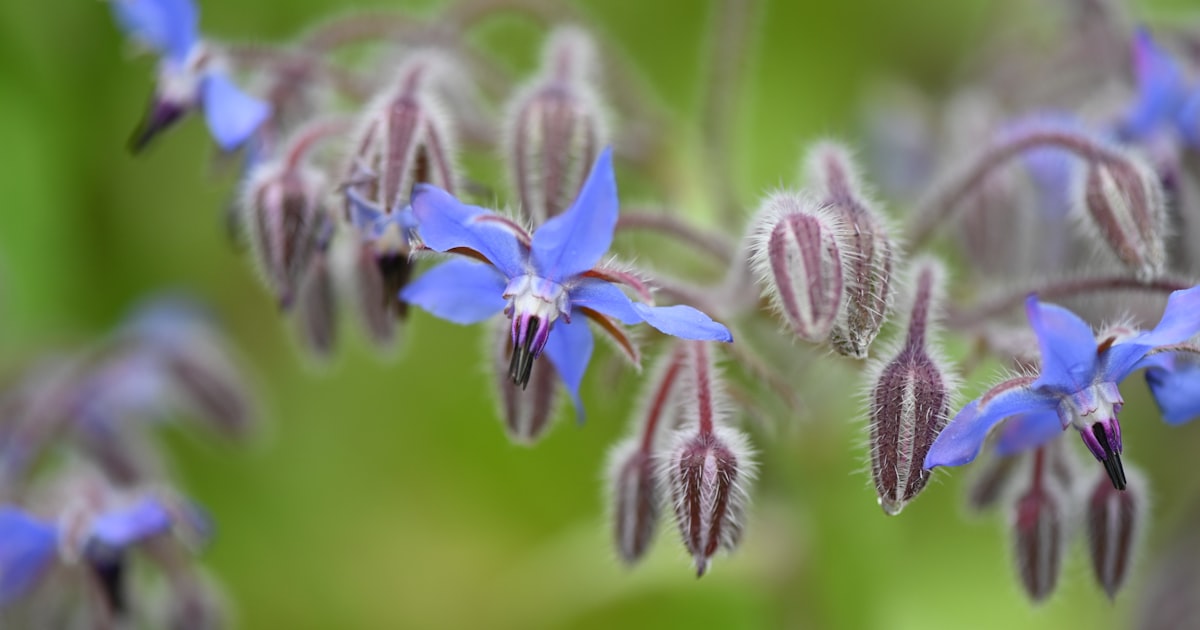
If you could only plant one flowering companion in your veggie garden, borage would be a very strong contender. With its stunning star-shaped blue flowers, edible blooms, and an almost magnetic effect on bees, borage is the kind of plant that makes your whole garden work better just by being there.
Let’s get into everything you need to know about this gorgeous, generous plant.
Quick Facts
| Family | Boraginaceae (Borage family) |
| Sun | Full sun |
| Water | Moderate |
| Difficulty | Easy |
| Time to Flower | 6 to 8 weeks from seed |
| Plant Type | Annual (self-seeding) |
What Makes Borage Special
Borage (Borago officinalis) is one of those plants that ticks every box. Beautiful? Yes. Useful? Incredibly. Easy to grow? Almost embarrassingly so.
Here is what borage brings to your garden:
- Pollinator paradise. Bees go absolutely wild for borage flowers. The bright blue, star-shaped blooms are rich in nectar that refills constantly throughout the day. If you want bees visiting your veggie patch, borage is your best invitation.
- Edible flowers. The flowers taste like fresh cucumber, which is a delightful surprise. Toss them in salads, float them in drinks, or freeze them in ice cubes for a fancy touch at your next barbecue.
- Dynamic accumulator. Like its cousin comfrey, borage has deep roots that mine potassium and other minerals from the subsoil, making them available to nearby plants.
- Self-seeding champion. Plant borage once and you will have it forever. It drops seeds prolifically, and new plants pop up year after year in the most welcome spots.
Growing Borage from Seed
Borage is best sown directly where you want it to grow. It develops a long taproot and does not love being transplanted, so direct sowing is the way to go.
When to Sow
In most of Australia, you can sow borage in early spring through to autumn. In tropical and subtropical areas, autumn and winter sowings work beautifully as it prefers the cooler end of its growing season in warmer climates.
How to Sow
- Choose a sunny spot with reasonable drainage. Borage is not fussy about soil quality.
- Sow seeds about 1 cm deep and 30 to 40 cm apart.
- Water gently and keep moist until germination, which usually takes 7 to 14 days.
- Thin seedlings if needed, though borage is quite happy growing in a friendly crowd.
That is honestly about it. Borage does not need much fussing over.
COMPANION PLANTING MADE EASY
Find the perfect plant pairings
VeggieCrush helps you plan which companions to plant alongside your veggies, including borage and other pollinator-friendly flowers.
Download the free appCompanion Planting with Borage
Borage is a classic companion plant, and for good reason. Here are its best pairings:
- Tomatoes. This is the legendary combination. Borage is said to improve tomato growth and flavour, and it definitely attracts the pollinators your tomato flowers need.
- Strawberries. Another classic pairing. The pollinator attraction alone makes it worthwhile, and many gardeners swear the strawberries taste better.
- Brassicas. Borage can help deter cabbage worms and attract beneficial predatory insects.
- Cucurbits. Pumpkins, zucchini, and cucumbers all need pollinators, and borage delivers them in droves.
Caring for Borage
Borage is wonderfully low maintenance. Here are the basics:
- Water moderately. Once established, borage handles dry spells reasonably well, but consistent moisture keeps it flowering longer.
- Feeding is rarely necessary. Borage is not a heavy feeder and does just fine in average garden soil.
- Staking can be helpful for taller plants, which can reach 60 to 90 cm. They can get a bit floppy under their own weight, especially after rain.
- Deadheading is not required, but if you want to slow down self-seeding, remove spent flowers before they set seed.
A Note on Those Hairy Leaves
Borage leaves are covered in small, bristly hairs that can be a bit prickly. Wear gloves when handling the plants if your skin is sensitive. The young leaves are edible and taste similar to cucumber, but the hairs make them less pleasant to eat raw as they mature. Young leaves are best chopped finely in salads or added to cold drinks.
Let It Naturalise
Here is the best advice for borage: let it do its thing. Once you have it in your garden, it will self-seed and pop up in new spots each year. Some of those spots will be perfect, and some will be less convenient. Simply pull out any plants that are in the way (they come out easily) and let the well-placed ones grow.
Over time, your garden develops its own population of borage that appears exactly when and where it is needed. It is a beautiful, slightly wild look that turns a tidy veggie patch into something that feels alive and buzzing, literally.
TRACK YOUR GARDEN'S POLLINATORS
See which flowers bring in the most bees
Log your observations in VeggieCrush and watch how adding borage and other companion flowers transforms your garden's productivity.
Download the free appA Little History
Borage has a long history in European herbal medicine, where it was believed to bring courage and dispel melancholy. The old saying goes, “Borage for courage.” Roman soldiers reportedly drank borage tea before heading into battle.
In more practical terms, borage has been used as a pot herb for centuries, and its seed oil is rich in gamma-linolenic acid (GLA), which is used in modern supplements.
The Bottom Line
Borage is one of those rare plants where beauty and function overlap perfectly. It looks gorgeous, feeds the bees, tastes great in a salad, and makes your whole veggie garden more productive just by being there. Best of all, you only need to plant it once.
Scatter some seeds, stand back, and watch the stars appear.
Get the VeggieCrush App
Join thousands of Aussie gardeners growing better with personalised planting reminders, pest alerts, and expert advice.


Free to download on iOS and Android. No credit card required