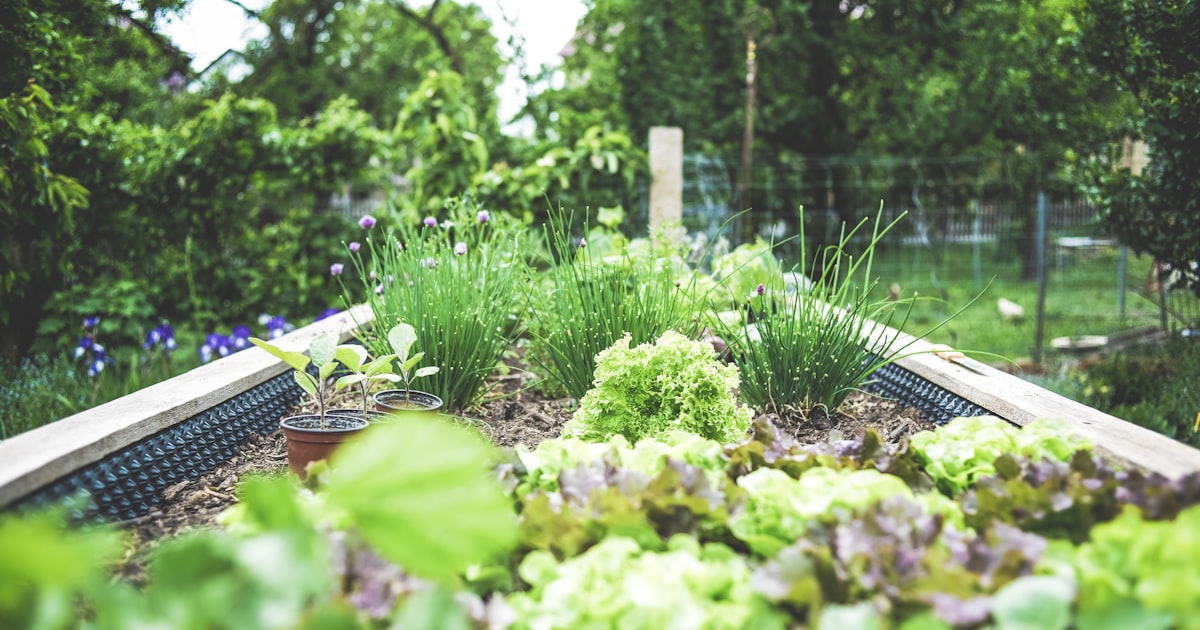
You have probably heard the basics of companion planting. Tomatoes and basil are best mates. Carrots and onions help each other out. Marigolds keep pests away. All true, all useful.
But what if you could go deeper? What if instead of simple pairings, you could build entire communities of plants that work together as a team? That is exactly what plant guilds are all about, and once you start thinking this way, your garden will never be the same.
What Is a Plant Guild?
A plant guild is a group of 4 to 6 plants that are intentionally placed together because each member contributes something to the group. The concept comes from permaculture, where the idea is to mimic how plants grow together in natural ecosystems.
In a guild, each plant has a job:
- The star: The main crop you want to harvest
- The protector: A plant that deters pests or attracts beneficial insects
- The feeder: Something that adds nutrients to the soil
- The ground cover: A low-growing plant that suppresses weeds and retains moisture
- The pollinator attractor: Flowers that bring in bees and other helpers
Not every guild needs all five roles, but the more functions you can stack, the more resilient and productive your garden bed becomes.
Why Guilds Work Better Than Simple Pairings
Pairing tomatoes with basil is great, but it is a bit like having a conversation with one person. A guild is like building a team where everyone brings different skills to the table.
Benefits of guilds over simple pairings:
- Multiple pest deterrent strategies working at once
- Better soil coverage means fewer weeds
- Improved pollination from diverse flowers
- More efficient use of space (plants at different heights and root depths)
- Greater biodiversity, which naturally reduces pest and disease problems
Let’s look at three guilds you can start building in your Australian garden right now.
The Tomato Guild
This is probably the most popular guild for home gardeners, and it works beautifully in Australian conditions.
| Plant | Role | How It Helps |
|---|---|---|
| Tomato | Star crop | The main event |
| Basil | Protector | Repels aphids and whitefly; may improve tomato flavour |
| Marigold | Pest deterrent | Repels nematodes and whitefly; attracts hoverflies |
| Parsley | Beneficial insect attractor | Flowers attract predatory wasps and hoverflies |
| Borage | Pollinator magnet | Attracts bees like nothing else; edible flowers too |
How to plant it: Put your tomato in the centre (or at the back if against a wall). Plant basil 20cm away on one side. Marigolds go at the front edges. Tuck parsley in between, and give borage a spot on the sunny side where it has room to spread.
Spacing note: This guild works in a space as small as 1 metre square, though 1.5 metres gives everything room to breathe.
The Brassica Guild
Growing broccoli, cabbage, or kale? They are magnets for cabbage moth and aphids. This guild creates a defence system around your brassicas.
| Plant | Role | How It Helps |
|---|---|---|
| Broccoli (or cabbage/kale) | Star crop | The main harvest |
| Dill | Beneficial insect attractor | Draws in parasitic wasps that attack cabbage caterpillars |
| Onion or spring onion | Protector | Strong scent confuses cabbage moth |
| Alyssum | Ground cover and pollinator | Low-growing, suppresses weeds, attracts hoverflies |
| Nasturtium | Trap crop | Aphids prefer nasturtium, drawing them away from brassicas |
How to plant it: Brassicas in the centre with good spacing (40 to 60cm apart). Interplant onions or spring onions between them. Ring the edges with alyssum for ground cover. Tuck dill behind the brassicas, and plant nasturtium at the outer edges where it can sprawl.
DESIGN SMARTER GARDENS
Build companion planting guilds with VeggieCrush
Our smart planner suggests companion plants that work together, helping you create productive guilds in any sized garden.
Download the free appThe Three Sisters Plus Guild
The classic Three Sisters planting (corn, beans, squash) is one of the oldest companion planting systems in the world. We are going to upgrade it for Australian gardens.
| Plant | Role | How It Helps |
|---|---|---|
| Corn | Structure | Provides a living trellis for climbing beans |
| Climbing beans | Nitrogen fixer | Feeds nitrogen into the soil for the whole guild |
| Squash or pumpkin | Ground cover | Large leaves shade the soil, suppress weeds, retain moisture |
| Calendula | Pollinator attractor | Brings in bees and beneficial insects; medicinal too |
How to plant it: Create a mound about 60cm across. Plant 3 to 4 corn seeds in the centre. Once they are 15cm tall, plant bean seeds at the base of each corn stalk. Plant squash seeds at the edge of the mound. Scatter calendula around the perimeter.
Important note: Use a tall corn variety for this to work. Dwarf corn will not support climbing beans well.
Building Your Own Guilds
Once you understand the roles, you can start designing custom guilds for your own garden. Here is a framework to follow:
- Choose your star crop. What do you most want to harvest?
- Identify its main pest problems. What bugs or diseases typically attack it?
- Find a protector plant that deters those specific pests.
- Add a ground cover to suppress weeds and keep soil moist (alyssum, clover, and lettuce all work well).
- Include a flower that attracts pollinators and beneficial insects.
- Consider a nitrogen fixer if your star crop is a heavy feeder (beans, peas, or clover).
Spacing and Layout Tips
Guilds do not need to be planted in a rigid pattern. In fact, a slightly informal layout often works better because it mimics natural plant communities.
General guidelines:
- Give your star crop the spacing it needs. Do not crowd it.
- Tuck smaller plants (herbs, flowers) into gaps and edges.
- Let ground cover plants fill in naturally.
- Consider height: tall plants at the back or centre, short plants at the edges.
- Remember that some guild members (like borage and nasturtium) can get quite large. Give them room.
LEVEL UP YOUR GARDEN
Take companion planting to the next level
VeggieCrush tracks what you are growing and suggests companion plants and guilds tailored to your specific garden.
Download the free appCommon Guild Mistakes
Overcrowding. Guilds are about diversity, not density. Give each plant the space it needs to thrive.
Ignoring the seasons. Not all guild members grow in the same season. Your tomato guild is a warm season affair. Your brassica guild is a cool season project. Plan accordingly.
Forgetting maintenance. Guilds are lower maintenance than monoculture beds, but they are not zero maintenance. You still need to water, feed, and harvest regularly.
Being too rigid. If a plant in your guild is not performing, swap it out. Guilds are flexible. The point is the function each plant serves, not the specific species.
The Bigger Picture
Plant guilds are really about shifting how you think about your garden. Instead of rows of individual crops, you start seeing communities of plants supporting each other. It is a more natural, more resilient, and honestly more interesting way to garden.
Start with one guild this season. Watch how the plants interact. Notice the beneficial insects that show up. Pay attention to the weeds that do not. Then build from there. Before long, your whole garden will be a network of little plant communities, each one working harder than any solo crop ever could.
Get the VeggieCrush App
Join thousands of Aussie gardeners growing better with personalised planting reminders, pest alerts, and expert advice.


Free to download on iOS and Android. No credit card required